






Description
U.S. Navy Mk 11 Mod 7 Aircraft Gunsight for F-8D/F-8E Crusader
Item Overview
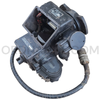
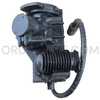
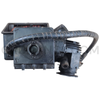
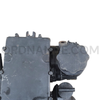
This U.S. Navy Sight Unit Mk 11 Mod 7 is a gyroscopic, lead-computing aircraft gunsight documented for the Vought F-8D and F-8E Crusader. It formed part of the aircraft’s AN/AWG-4 fire-control system and worked with the EX-16 computer group to give the pilot a corrected aiming point for the four fixed 20mm guns. The sight projected a fixed gun-line image and a movable aiming pipper onto an upper reflector plate in the pilot’s field of view. The modification digit on this example is worn but appears to read “7,” and its housing and components match the Mk 11 Mod 7 illustrated in the Navy flight manual. This is an incomplete original sight with an open access compartment, exposed internal components, and a missing upper reflector-plate assembly.
Identification and Features
The data plate identifies this assembly as a U.S. Navy Bureau of Aeronautics sight unit and records serial number 622 and a marked weight of 15 pounds. The apparent subassembly number is 1493435. A “REPAIRED NAFI” marking indicates repair work by the U.S. Naval Avionics Facility at Indianapolis, Indiana. In operation, the sight’s fixed reticle was aligned with the aircraft’s gun line. A motor-driven gyroscope produced a movable, donut-shaped pipper that responded to the aircraft’s turn rate and electrical signals from the fire-control computer. The EX-16 computer group used range, range rate, acceleration, air resistance, and gravity-drop information to calculate the required lead. Target range could be supplied by the AN/APQ-83 or AN/APQ-94 radar, or the pilot could select a fixed estimated range. The resulting signals moved the pipper so the pilot could place it over the target while firing the Crusader’s fixed forward-firing guns.
- Official designation: Sight Unit Mk 11 Mod 7
- Service: U.S. Navy
- Marking authority: BUAER
- Serial number: 622
- Marked weight: 15 lbs.
- Apparent subassembly number: 1493435
- Repair marking: REPAIRED NAFI
- Fire-control system: AN/AWG-4
- Computer group: EX-16
- Aircraft application: F-8D and F-8E Crusader
- Manual reference: NAVAIR 01-45HHD-1, Figure 8-4
Historical Background
The Mk 11 was a U.S. Navy gyroscopic gunsight family developed through several modifications during the 1950s and 1960s. Earlier versions included the Mk 11 Mod 3, which was produced at the Naval Ordnance Plant in Indianapolis. Mk 11 sights were used in early F8U Crusaders, while the later Mod 7 was integrated into the AN/AWG-4 fire-control system of the F-8D and F-8E. Navy manuals documented the Mk 11 Mod 7 in these aircraft by the 1960s, and the sight remained in use with the later F-8H. The plate’s BUAER marking refers to the Bureau of Aeronautics, which managed Navy aircraft equipment until 1959. The “REPAIRED NAFI” marking records later service by the Naval Avionics Facility in Indianapolis, the successor to the earlier Naval Ordnance Plant. During the Vietnam War, Navy and Marine Corps Crusaders used this type of sighting system during air-to-air and ground-attack missions. The Mk 11 Mod 7 therefore represents the Navy’s transition from earlier gyro sights to radar-assisted, computer-controlled gun aiming.
Weapon-system history: The Vought F-8 Crusader began as the F8U and made its first flight in 1955. It entered Navy service in 1957 and received the F-8 designation when the military aircraft designation system changed in 1962. The single-seat, supersonic fighter used a variable-incidence wing that could be raised for improved visibility and lower-speed handling during carrier approaches. Unlike many fighters developed during the early guided-missile era, the Crusader retained four Mk 12 Mod 0 20mm cannon as a major part of its armament. This emphasis on gun combat helped earn it the nickname “Last of the Gunfighters.” The F-8D and F-8E were later radar-equipped versions, and the F-8E also served in an expanded air-to-ground role.
History of use: Navy and Marine Corps Crusaders flew from aircraft carriers and land bases during the Vietnam War. They performed air-to-air combat, fighter cover, and ground-attack missions. The F-8’s cannon armament and maneuverability remained valuable at a time when other fighters were becoming more dependent on missiles. Mk 11 sight units helped Crusader pilots judge the correct point of aim during turning gun attacks, making this assembly a direct part of the aircraft’s combat fire-control chain.
Condition
This is an incomplete original U.S. Navy aircraft gunsight with service wear and an identifiable data plate. The access compartment is uncovered, leaving part of the internal optical and electrical construction exposed. The upper reflector plate and its supporting glass assembly shown in the Navy manual are missing. The remaining housing, internal components, mounting points, connectors, and side-mounted equipment are included as shown in the inventory photographs. The NAFI marking records a period repair at the Naval Avionics Facility in Indianapolis. The open construction gives the sight added value for a technical display, restoration reference, or study of Cold War aircraft fire-control equipment.
Ideal For
This item offers a documented connection to one of the U.S. Navy’s best-known carrier fighters. Its recognizable housing, visible internal components, original identification plate, and confirmed F-8D/F-8E application make it well suited to a Crusader cockpit display or a focused exhibit on naval aircraft gunsights. It can also support restoration research by showing the internal layout and mounting arrangement of the Mk 11 sight family.
- F-8D or F-8E Crusader displays
- Naval aviation collections
- Vietnam War aircraft exhibits
- Cold War avionics collections
- Aircraft gunsight research
- Cockpit restoration reference
- Fire-control system displays
- Technical and educational exhibits
Approx length 10", Approx width 8", Approx height 14", Approx weight 10.9lbs.
Pictures are stock images of our inventory. Unless otherwise noted, you will not be receiving the exact item shown in the pictures. The pictures are representative of the item’s general condition. The item you receive might be slightly better, or worse, condition than was shown in the pictures.
Please visit our page about order lead times here: Order Lead Times.