



Description
MA-4 Aircraft Bomb Rack Hook for UH-1 Huey Helicopters
Item Overview
This U.S. MA-4 bomb-rack suspension hook is a component of aircraft store-carrying equipment. Army records document its application on UH-1 Huey helicopters. Its connection to the Huey makes it a useful addition to collections covering military aviation, aircraft suspension systems, and helicopter mission equipment.
Identification and Features
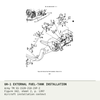
The Army identifies this component as Hook, Bomb Rack. Technical Manual TM 55-1520-210-23P-3 lists the exact part number and NSN under Figure 435, item 67, on printed page 1785.
- Item: Aircraft bomb-rack suspension hook
- Parent rack: MA-4
- Part number: 60C98799
- NSN: 1095-00-411-5114
- Official nomenclature: Hook, Bomb Rack
- Documented aircraft: UH-1H, UH-1M, and UH-1V
- Manual illustration: Figure 435, item 67
Function
The hook engages the suspension lug of a carried load, known as an aircraft store. Within the complete rack, the hooks and their connecting mechanism support the store until the release system opens them. The hook forms the direct mechanical connection between the rack and the suspended load.
Documented End-Item Application
The hook’s Army parts-list entry carries applicability codes UHH, UHM, and UHV, identifying the UH-1H, UH-1M, and UH-1V helicopters. An associated parts breakdown also places the parent rack within the UH-1 external fuel-tank installation. This documents a fuel-tank suspension application within the Huey equipment family.
Product History
This hook appears in the Army’s illustrated repair-parts catalog published March 15, 1988. The catalog lists it separately from the rack’s links, springs, frame, and other hook. That record documents its place as an individual repair component in the military aircraft supply system during the later Cold War.
Parent-Equipment History
The MA-4 family uses a two-hook arrangement with 14-inch suspension and an electromechanical release system. Manufacturer literature describes the parent rack as equipment for carrying and releasing airborne stores. With a suitable pylon, the rack can also accommodate jettisonable external fuel tanks, extending its role beyond bomb carriage.
Weapon-System Background
The Bell UH-1 Iroquois grew from an Army requirement for a utility and medical evacuation helicopter. Its XH-40 prototype first flew in 1956. The familiar Huey nickname came from the original HU-1 designation, which changed to UH-1 in 1962. The aircraft later supported a wide range of removable mission equipment.
History of Use
Hueys arrived in Vietnam in 1962 and served in troop transport, medical evacuation, and armed support roles. Their adaptable equipment installations helped the helicopter family handle different missions. Suspension components such as this hook illustrate the smaller mechanical parts behind the aircraft’s external carrying systems.
Condition
Please check the pictures for the general condition of the item.
Ideal For
This component is suited to collections and exhibits covering Huey helicopters and military aircraft suspension equipment.
- UH-1 Huey helicopter collections
- MA-4 bomb-rack displays
- Aircraft suspension-equipment research
- Cold War aviation exhibits
- Military museum and educational displays
Approx length 4.75", Approx width 1", Approx height .5", Approx weight lbs.
Pictures are stock images of our inventory. Unless otherwise noted, you will not be receiving the exact item shown in the pictures. The pictures are representative of the item’s general condition. The item you receive might be slightly better, or worse, condition than was shown in the pictures.
Please visit our page about order lead times here: Order Lead Times.