




Description
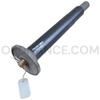
U.S. Army M29A1 81mm Mortar M23A1 Bipod Traversing Spindle Assembly, P/N 7308532
Item Overview
This U.S. Army traversing spindle assembly is a replacement component for the M23A1 bipod used with the M29A1 81mm mortar. Identified as P/N 7308532 and NSN 1015-00-342-1099, the assembly formed part of the mortar’s left and right aiming mechanism. Its screw-driven design allowed the gunner to make small, controlled changes in direction while keeping the mortar laid on its firing position. The marked military packaging dates from January 1986, placing this example within the later support period of the M29A1 mortar system.
Identification and Features
Army TM 9-1015-200-30&P identifies P/N 7308532 as the traversing spindle assembly in Figure B-4, item 9. The smaller hanging tag carries P/N 7236713, which the same manual identifies as the traversing spindle screw in Figure B-6, item 7. These two numbers describe related levels of the mechanism: 7308532 identifies the complete assembly, while 7236713 identifies the screw used within it. Additional markings include NSN 1015-00-342-1099, FSCM/CAGE code 9M414, procurement contract DAAA22-84-C-6125, and a January 1986 packaging date.
- Component: Traversing spindle assembly
- Assembly part number: 7308532
- National Stock Number: 1015-00-342-1099
- Spindle screw part number: 7236713
- FSCM/CAGE code: 9M414
- Contract: DAAA22-84-C-6125
- Packaging date: January 1986
How It Worked
The M23A1 traversing mechanism used an internal spindle screw operating within a nut and tube. When the gunner turned the traversing handwheel, the spindle screw rotated and forced the nut to move along the mechanism. That movement shifted the yoke supporting the upper portion of the mortar barrel, changing the weapon’s horizontal direction. The M23A1 bipod provided approximately 95 mils of traverse, equal to about 19 handwheel turns, to either side of center. This fine adjustment allowed the gunner to correct the mortar’s direction without lifting and repositioning the entire bipod. Larger directional changes were made by moving the bipod legs and then using the traversing mechanism to complete the final aim.
End-Item Application
The M23A1 bipod was one of the main assemblies of the U.S. M29A1 81mm mortar. The complete mortar combined the M29A1 cannon, M23A1 bipod, baseplate, and M53-series sightunit. The bipod supported the upper part of the cannon and contained the weapon’s elevating mechanism, traversing mechanism, cross-level controls, yoke, and recoil-absorbing components. During operation, the gunner stood on the left side of the mortar, where he could observe the sight and operate the elevation and traverse controls. The assistant gunner worked from the right side and loaded the mortar. Together, the bipod and spindle mechanism helped the crew turn firing data into accurate elevation and direction settings.
Historical Background
The U.S. Army adopted the M29 81mm mortar in 1952 as a lighter and longer-range replacement for the World War II-era M1 mortar. The improved M29A1 followed in 1964 and used a hard-chromed bore that increased barrel life and simplified cleaning. Its M23A1 bipod retained the familiar screw-operated aiming system used on earlier American infantry mortars while supporting the updated cannon and sighting equipment. P/N 7308532 remained an Army-listed replacement assembly in the 1985 edition of TM 9-1015-200-30&P. The January 1986 packaging date shows that traversing-mechanism parts were still being supplied near the end of the M29A1’s primary U.S. service period. The M252 81mm mortar began replacing the M29A1 in 1987.
History of Use
The M29 and M29A1 served as standard American medium mortars during the Vietnam War and later Cold War training and operational service. Their 81mm ammunition included high-explosive rounds for infantry fire support, white-phosphorus rounds for smoke and marking, illuminating rounds for nighttime operations, and practice ammunition for crew training. A five-man mortar squad normally included a squad leader, gunner, assistant gunner, and two ammunition bearers. The gunner used the sight, elevation control, and traversing handwheel to lay the weapon according to firing data. Components such as this spindle assembly were essential to maintaining the fine directional control required for accurate indirect fire.
Condition
This is a military-surplus traversing spindle assembly in the condition shown in the inventory photographs. Its identification includes P/N 7308532, NSN 1015-00-342-1099, FSCM/CAGE code 9M414, contract DAAA22-84-C-6125, and a 1/86 packaging marking. The hanging identification tag reads P/N 7236713 for the traversing spindle screw.
Ideal For
This documented assembly is a strong choice for an M29A1 mortar or M23A1 bipod restoration, a military museum exhibit, an ordnance-parts collection, or a technical display explaining how mortar aiming mechanisms worked. Its traceable part number, stock number, contract, packaging date, and separately identified spindle screw provide valuable details for research and display. It also offers collectors a recognizable mechanical component directly connected to one of the principal U.S. 81mm mortar systems of the Vietnam and Cold War periods.
- M29A1 mortar restorations
- M23A1 bipod restorations
- Vietnam-era mortar displays
- U.S. Army ordnance collections
- Military museum exhibits
- Mortar-mechanism studies
Approx length 11", Approx width 3", Approx height 3", Approx weight 1.4lbs.
Pictures are stock images of our inventory. Unless otherwise noted, you will not be receiving the exact item shown in the pictures. The pictures are representative of the item’s general condition. The item you receive might be slightly better, or worse, condition than was shown in the pictures.
Please visit our page about order lead times here: Order Lead Times.