









Description
U.S. M127A1 White Star Parachute Ground Illumination Signal – Loaded March 1967
Item Overview
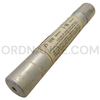
This inert U.S. M127A1 White Star Parachute Ground Illumination Signal is a Vietnam War-era military collectible loaded in March 1967. The original design used a small rocket to carry a white flare into the air, where it descended beneath a parachute. Its dated markings make it a useful addition to displays of U.S. field equipment, military signaling devices, and battlefield illumination.
Identification and Features
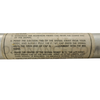
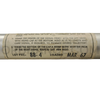
The markings identify the signal type, production lot, and loading month.
- Model and type marking: "GROUND WHITE STAR PARACHUTE M127A1"
- Production lot marking: "LOT PXC-88-4"
- Loading-date marking: "LOADED MAR 67" — March 1967
- Launching-tube material: Aluminum
- Nominal complete-signal dimensions: 10.16 inches long × 1.67 inches in diameter
Construction and Included Components
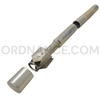
The included components are the long aluminum launching tube and its separate, cup-shaped removable firing cap. In the original service signal, the tube housed the rocket propulsion assembly and the parachute-supported illuminant. The cap belonged to the signal's own firing mechanism. Together, these parts show the compact form of an expendable handheld launcher.
Function
The service design used a fin-stabilized rocket to raise the illuminant before the parachute opened. The parachute slowed the burning flare's descent and kept its white light above the ground. TM 43-0001-37, pages 4-15–4-16, describes deployment at approximately 700–750 feet. It lists a 25-second minimum burn and describes about 30 seconds of illumination, supporting the commonly stated 25–30-second duration.
Documented End-Item Application
The M127A1 served as a self-contained handheld ground signal. Its documented missions include nighttime battlefield illumination, visual communication between troop positions, and surface-to-air distress signaling. Army reference identifiers include DODIC L312 and NSN 1370-00-753-1859. These identify the service signal type in military supply and technical records.
Product History
The March 1967 loading date places this example within the period of major U.S. involvement in the Vietnam War. Lot PXC-88-4 preserves a production reference alongside that date. For collectors, this combination is useful when comparing signals with period packaging, manuals, and dated field equipment.
Parent-Equipment History
The M127A1 belonged to a wider family of handheld rocket-propelled ground signals. Related parachute signals included the red-star M126A1 and green-star M195. Army manuals grouped these models together because they shared a similar launcher and parachute-suspended payload layout. Color and model markings distinguished the signals within that family.
Weapon-System Background
Military pyrotechnics supplied visible signals and temporary lighting for ground forces. Illumination could come from handheld devices, mortars, artillery, or aircraft. The M127A1 filled the portable, individual-carried role in this wider system. Its elevated white flare helped personnel observe ground features and communicate by visible light during periods of limited visibility.
History of Use
The Army's 1969 FM 23-30 listed both the M127 and M127A1 as white-star parachute signals used for signaling and illumination. This period manual places the model within Vietnam-era ground-force equipment and training. Later Army publications continued to describe the M127A1 for battlefield lighting, distress signaling, and communication between troop positions. Its familiar tube and cap remained part of the military handheld-signal family for decades.
Later Development History
Picatinny Arsenal reported further M127A1 development in 2016, following a project begun in 2011. Researchers sought a brighter illuminant while preserving useful burn time and reducing environmental concerns. That work shows the lasting value of the handheld white-star parachute concept. This March 1967 example preserves an earlier stage of that long equipment history.
Condition
The tube retains its model, lot, and loading-date markings. Please check the pictures for the general condition of the item.
Ideal For
This dated signal suits collections that show the smaller support items carried alongside weapons and field gear. The separate cap and marked launching tube make it useful for explaining the role of visual signals and illumination in military service.
- Vietnam War militaria collectors
- U.S. military pyrotechnics collections
- Field-equipment and signaling displays
- Military museums and researchers
Approx length 10", Approx width 1.5", Approx height 1.5", Approx weight 1.7lbs.
Please visit our page about order lead times here: Order Lead Times.