


Description
WWII U.S. Army Air Forces Adapter, Cluster M12 Hook-and-Cable Assembly – April 1945
This original World War II U.S. Adapter, Cluster M12 hook-and-cable assembly was part of a simple aircraft suspension system that allowed two 100-lb-class aerial bombs or bomb clusters to be carried from a single bomb station.
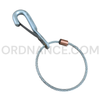
A complete Adapter, Cluster M12 required two matching hook-and-cable assemblies. This listing is for one assembly, consisting of a flexible steel cable loop and metal snap hook.
The original crate was packed April 12, 1945 and was marked for 50 complete M12 adapters, or 100 hook-and-cable assemblies. This exactly matches the two-assembly requirement for each complete adapter.
Historical Significance
During World War II, the U.S. Army Air Forces needed practical ways to increase the number of smaller bombs that could be carried on existing aircraft bomb stations.
The M12 Cluster Adapter provided a straightforward solution. Rather than requiring a special permanent rack, it used pairs of steel cable loops and snap hooks to suspend a second bomb or bomb cluster beneath the first.
The system was used with 100-lb-size bombs and bomb clusters. It allowed two stores to be carried from a station that would normally support one.
The M12 was part of the large family of specialized bomb suspension, clustering, and release equipment developed for U.S. combat aircraft during World War II. Surviving examples are useful artifacts from the mechanical side of wartime aircraft armament.
What This Item Is and Does
This item is one of the two hook-and-cable assemblies required to form a complete Adapter, Cluster M12.
When installed, the cable loops of the two assemblies were positioned at the suspension points of the upper bomb before it was attached to the aircraft bomb shackle. The snap hooks were then connected to the suspension points of the lower bomb or cluster.
The two stores were therefore carried together from one aircraft station.
Once released from the aircraft, the M12 did not hold the bombs together during the fall. The stores separated and fell independently.
This is an important difference between the M12 and other cluster systems that used frames, straps, or release mechanisms to keep multiple bombs together for part of their descent.
TM 9-1980 Identification
The M12 is specifically documented in TM 9-1980, Bombs for Aircraft.
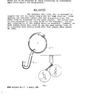
The manual's section on hook-and-cable adapters explains that these devices were intended to hang more than one bomb or bomb cluster from a single shackle.
Paragraph 174, Adapter, Cluster, M12, confirms that:
- One complete M12 adapter consists of two hook-and-cable assemblies
- Each assembly uses a steel cable loop with a snap-type hook
- The M12 was intended to suspend two 100-lb-size bombs or clusters from one station
The manual also explains that the bombs did not remain clustered after release.
Original April 1945 Packaging
The surviving package markings are particularly useful because they show how these parts were supplied during World War II.
The crate was marked for:
- 50 ADAPTERS, CLUSTER M-12
- 100 HOOK AND CABLE ASSEMBLIES
- Date of packing: April 12, 1945
The quantity provides a direct check on the manual description: two hook-and-cable assemblies were required for each M12 adapter.
The April 1945 packing date places these assemblies in the closing months of World War II in Europe and during continued preparations for operations in the Pacific.
Key Features
- Official designation: Adapter, Cluster M12
- Component: Hook-and-cable assembly
- Service: U.S. Army Air Forces
- Period: World War II
- Original package date: April 12, 1945
- Assemblies required per complete M12 adapter: 2
- Original crate quantity: 50 complete adapters
- Original crate component quantity: 100 hook-and-cable assemblies
- Construction: Flexible stranded steel cable
- Attachment: Metal snap hook
- Purpose: Suspend two 100-lb-class bombs or bomb clusters from a single aircraft station
- Release arrangement: Stores separated after leaving the aircraft
- Manual reference: TM 9-1980, Bombs for Aircraft
- Manual paragraphs: 172 and 174
- Item type: Inert aircraft suspension hardware
- Explosive component: No
Why This Item Matters
Aircraft bomb racks, shackles, and release mechanisms are familiar pieces of WWII aviation equipment, but the smaller adapters that allowed crews to change an aircraft's bomb load are much less commonly recognized.
The M12 is a good example of the practical hardware developed to get more use from existing aircraft bomb stations without adding a large permanent mechanism.
This assembly also has unusually strong documentation. The original crate quantity directly agrees with the Army technical manual's statement that a complete M12 required two assemblies.
For an aviation display, it helps show how bombs were actually mounted and supported before a mission rather than focusing only on the bomb itself.
About This Item
This listing is for one original WWII M12 hook-and-cable assembly.
Because two assemblies make one complete Adapter, Cluster M12, one assembly represents one-half of the original adapter set.
The item may show oxidation, discoloration, storage residue, scratches, cable wear, plating wear, and other signs of age and long-term military storage.
This is inert mechanical aircraft hardware. It contains no explosive, propellant, fuze, primer, or other energetic material.
The original bomb, second M12 hook-and-cable assembly, aircraft bomb rack, bomb shackle, arming-wire equipment, and other associated components are not included unless specifically shown or stated.
Ideal For
- WWII U.S. Army Air Forces collections
- Aircraft bomb-rack displays
- WWII bomber restoration displays
- Military aviation museums
- Aircraft ordnance-equipment collections
- Bomb suspension and release-system displays
- Original WWII hardware collections
- Technical-reference collections
- Aviation ground-crew exhibits
- Educational military-history displays
Approx length 6", Approx width 3", Approx height 0.5", Approx weight 0.1 lbs.
Pictures are stock images of our inventory. Unless otherwise noted, you will not be receiving the exact item shown in the pictures. The pictures are representative of the item's general condition. The item you receive might be slightly better, or worse, condition than was shown in the pictures.
Please visit our page about order lead times here: Order Lead Times