





Description
U.S. Air Force Mergenthaler Linotype Tester, Pre-Flight, P/N 68037
Item Overview
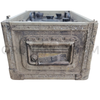
This U.S. Air Force Tester, Pre-Flight is a portable electrical test instrument manufactured by Mergenthaler Linotype Company under contract AF33(600)23601. Ground crews used equipment of this type to check important bombing-system circuits before an aircraft left the flight line. Its panel combines a 20-volt check, numbered test positions, a release-circuit test, voltage adjustment, and a protected P13 test connection. The serial-numbered data plate and Air Force stock number make this a well-identified example of early Cold War aircraft ground-support equipment.
Identification and Features
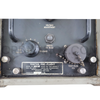
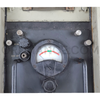
The manufacturer’s plate identifies the unit as “TESTER, PRE-FLIGHT” and records Mergenthaler Linotype Company of Brooklyn, New York, as its maker. The front panel is arranged for quick electrical checks through a selector, voltage control, meter-reading button, and test connector. A hinged cover protects the P13 connection when it is not in use.
- Official marking: TESTER, PRE-FLIGHT
- Manufacturer: Mergenthaler Linotype Co.
- Manufacturing location: Brooklyn, New York
- Part number: 68037
- Air Force stock number: 7CAC-809639-4
- Serial number: 150
- Contract number: AF33(600)23601
- Panel markings: 20V CHECK, RELEASE, and PRESS TO READ
- Numbered test-selector positions
- Covered P13 test connector
How It Worked
The panel layout shows a practical pre-flight testing sequence. A technician connected the tester to the associated aircraft equipment through the P13 connection, selected the required numbered circuit, and used the 20V CHECK position to verify the system’s electrical supply or reference voltage. The voltage control allowed the test value to be set as directed by the applicable maintenance procedure. Pressing the PRESS TO READ button produced a momentary meter reading, while the RELEASE position checked the release-related circuit. These controls allowed the technician to find electrical problems before the aircraft was prepared for a mission.
End-Item Application
The documented system association is the M-1 toss-bomb computer equipment family. Mergenthaler also produced P/N 68038, a companion flight-line test set that connected directly to an M-1 computer through terminals including P13 and checked release, gyro, transducer, airspeed, altitude, and dive-angle functions. The matching manufacturer, consecutive part numbering, P13 connection, RELEASE marking, and numbered test positions place P/N 68037 within the same maintenance and checkout equipment family. The M-1 bombing system was installed in tactical aircraft including the Martin B-57B Canberra during the aircraft’s mid-1950s bombing-system improvement program.
Historical Background
Mergenthaler Linotype was best known for printing equipment, but the company also became an important manufacturer of precision military instruments during World War II. Its wartime work included fire-control and optical equipment for several branches of the U.S. military. During the early Cold War, the company applied that experience to aircraft bombing controls and their supporting test equipment. Mergenthaler’s automatic bomb-release technology used inputs such as aircraft speed, altitude, and flight angle to determine the proper release point during a pullout maneuver. Instruments such as this pre-flight tester supported those systems by giving maintenance crews a controlled way to check their electrical circuits on the ground.
History of Use
The M-1 toss-bomb computer belonged to a new generation of bombing equipment developed for fast jet aircraft. Toss bombing allowed an aircraft to approach at low altitude, begin a climbing maneuver, and release its weapon at a computer-determined point. The B-57B tactical bomber received the M-1 as part of a later equipment program that also connected the bombing system with AN/APG-31 radar equipment. Before a mission, ground personnel used pre-flight testers for quick circuit checks and larger flight-line test sets for more detailed simulations of speed, altitude, flight angle, and release functions. This testing helped confirm that the computer, aircraft wiring, and release-command circuits responded correctly before takeoff.
Condition
The tester retains its identification plate with the manufacturer, part number, stock number, serial number, and contract number readable. Its visible configuration includes the labeled selector positions, 20V CHECK control, RELEASE position, voltage adjustment, PRESS TO READ button, and covered P13 connection. The military finish, controls, hardware, and identification markings should be reviewed in the listing photographs for individual cosmetic condition.
Ideal For
This identified Air Force test instrument offers a substantial display component for collections focused on Cold War aviation, aircraft armament, bombing computers, and military electronics. Its labeled controls help explain the ground-maintenance work required to support early automatic bombing systems. The unit can also support a museum exhibit, technical training display, B-57 collection, or restoration of period flight-line equipment.
- Cold War aviation collections
- U.S. Air Force equipment displays
- B-57 Canberra exhibits
- Aircraft bombing-system collections
- Military electronics displays
- Flight-line equipment restoration
Approx length 18", Approx width 10", Approx height 8", Approx weight 18.6lbs.
Pictures are stock images of our inventory. Unless otherwise noted, you will not be receiving the exact item shown in the pictures. The pictures are representative of the item’s general condition. The item you receive might be slightly better, or worse, condition than was shown in the pictures.
Please visit our page about order lead times here: Order Lead Times.