





Description
Raytheon L-402 Control, Test Programmer, Ordnance No. 9195768
Item Overview
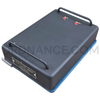
This Raytheon Control, Test Programmer is marked L-402 and Ordnance No. 9195768. It is a plug-in electrical module made for specialized guided-missile maintenance and checkout equipment. Its Federal Stock Number places it in the military supply class for guided-missile test equipment. Comparison with related Raytheon programmers strongly supports a connection to the HAWK air-defense system, with the L-402 most likely assigned to a launcher-related test program.
Identification and Features
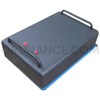
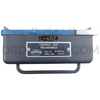
The assembly uses two carrying handles, a large rear contact array, and front-mounted electrical test points. These features allowed it to connect with a larger test console and route selected circuits for inspection. The voltage terminals are marked +270 VDC and what appears to be −97 VDC. Its common blue AMP contact board reflects a shared programmable-test-fixture design used by related Raytheon modules, but it does not make those modules interchangeable.
- Official nomenclature: Control, Test Programmer
- Program marking: L-402
- Manufacturer: Raytheon
- Ordnance number: 9195768
- Serial number: 11266
- Federal Stock Number: 4935-167-8662
- Modern NSN format: 4935-00-167-8662
- Package description: CONTROL
- Package marking: CC-A
- Package date notation: A-4/73
- Probable application: HAWK launcher maintenance test equipment
Historical Background
The L-402 dates from the Cold War period when the Army depended on specialized electronic equipment to inspect and maintain complex guided-missile systems. Its April 1973 package or processing notation falls within the early Improved HAWK era. Raytheon supplied HAWK equipment and produced dedicated support hardware for its different radar, command, launcher, and missile sections. Plug-in programmers allowed a larger shop test station to be configured for a particular group of circuits without building a separate console for every test.
Function and Operation
The L-402 was inserted into a compatible test station as a programmed electrical interface. Its rear contact matrix established the circuit paths required for the selected test, while the marked voltage terminals gave technicians access to important power or reference points. The front handles helped install and remove the module from the console. The unit was therefore a test-programming fixture rather than a stand-alone controller, operating power supply, or field firing control.
Probable End-Item Application
The most supportable application is HAWK guided-missile maintenance equipment, probably for a launcher-related test program. The 4935 stock classification confirms that the unit belonged to specialized guided-missile maintenance, repair, and checkout equipment. Its L-402 marking and its relationship to other HAWK-oriented Raytheon programmers support the launcher connection, although the meaning of the letter “L” has not been confirmed by an identified Army parts entry. The appropriate catalog identification is therefore a probable HAWK launcher test programmer rather than a BCC, AFCC, or radar programmer.
Related HAWK Test-Programmer Family
Known Raytheon programmers show that similar modules served different sections of the HAWK system. Their shared contact-board format indicates a common style of programmable test fixture, not a common end-item application. The letter-and-number markings most likely identify particular circuits or test programs rather than complete equipment models.
- L-402, Ord. 9195768: Probable HAWK launcher-related test program
HAWK Missile System Background
HAWK was a mobile, all-weather surface-to-air missile system developed during the 1950s and first fielded in 1960. A HAWK battery combined acquisition radars, high-powered illuminator radars, command and fire-control equipment, three-round launchers, missiles, and dedicated support equipment. During an engagement, the selected launcher received tactical commands through the fire-control system and positioning information from its assigned illuminator radar. The launcher then matched the illuminator’s direction, applied the required firing commands, and launched the selected missile.
History of Use
HAWK maintenance personnel used specialized shop equipment to inspect individual sections of the missile system and locate electrical faults before equipment was returned to service. A programmer such as the L-402 configured the test station for its assigned circuits by routing the correct contacts and voltage points through the module. The L-402 most likely supported checks associated with launcher electronics, while other marked programmers handled the AFCC, BCC, or radar sections. It was maintenance equipment and was not installed in a launcher or used as an operational firing console.
Condition
This listing is for the L-402 plug-in module with its marked housing, handles, voltage terminals, rear contact array, internal contact board, and associated packaging as shown. The A-4/73 marking is a package or processing date and should not be treated as a confirmed manufacturing date. The larger test console, connecting cables, external instruments, and other programmer modules are not included unless shown with the item.
Ideal For
This specialized Raytheon module is well suited to a collection or display focused on HAWK air-defense equipment, Cold War missile electronics, Army maintenance systems, or early programmable test fixtures. Its marked identity and unusual contact-array construction also make it a useful reference piece for restoring a HAWK maintenance shop or military electronics exhibit.
- HAWK missile-system collections
- Cold War air-defense displays
- Military electronics exhibits
- Raytheon equipment collections
- Guided-missile maintenance displays
- Test-equipment restoration projects
Approx length 10", Approx width 8", Approx height 5", Approx weight 4.4lbs.
Pictures are stock images of our inventory. Unless otherwise noted, you will not be receiving the exact item shown in the pictures. The pictures are representative of the item’s general condition. The item you receive might be slightly better, or worse, condition than was shown in the pictures.
Please visit our page about order lead times here: Order Lead Times.