

















Description
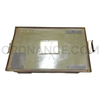
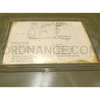
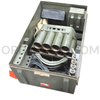
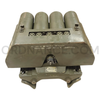
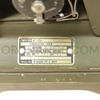
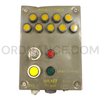
Tank Gunfire Simulator (Hoffman Device), P/N 61-176
The Hoffman tank gunfire simulator is a distinctive piece of military training equipment associated with U.S. Army armored vehicles. Listed here under manufacturer P/N 61-176, this device connects collectors with the field exercises that prepared tank crews for combat. Its historical role makes it a fitting subject for Cold War armor collections, military training exhibits, and displays about tank crew skills.
Function
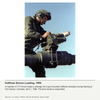
The Hoffman device reproduced the sound, flash, and smoke of a tank’s main gun during training. In service, it used special pyrotechnic training cartridges to create these effects. It worked alongside the Multiple Integrated Laser Engagement System, better known as MILES. The Hoffman device supplied the visible and audible firing effects, while separate laser equipment simulated the shot and detected hits. Together, these systems made exercises feel more like real combat without firing live tank shells at opposing crews.
Product History
Army references trace the Hoffman tank gunfire simulator to Hoffman-Werke instructions issued in January 1979 and revised on April 1, 1979. By the 1980s, Army manuals described the device as part of tank training with MILES. A 2001 U.S. Government Accountability Office report still discussed Hoffman devices used by the Army. These records establish a history that spans late Cold War training and the years that followed.
Documented Applications
Army manuals document Hoffman devices with the M65 MILES system for M60A1 and M60A3 tanks and the M82 MILES system for M1 and M1A1 Abrams tanks. These applications appear in TM 9-1265-369-10-1 and TM 9-1265-373-10-1. The Abrams manual also lists a complete tank gunfire simulator as Device No. 17-61. These references describe the Hoffman family’s military applications rather than establish the exact configuration of the item offered here.
Equipment History
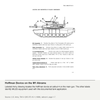
The Hoffman device formed part of the removable training equipment fitted to working Army tanks. Period illustrations show an external simulator body, a mounting clamp, a connecting cable, and a separate control unit inside the vehicle. The Abrams installation placed the simulator on the main gun’s bore evacuator, the enlarged section of the barrel that helps clear firing gases. This arrangement kept the firing effects outside the turret while allowing the crew to control the training equipment from within.
Weapon-System Background
The tanks associated with the Hoffman device span two major generations of American armor. The M60 reached combat units in December 1960. It followed the M48 and combined a diesel engine with a 105mm main gun. The M1 Abrams began reaching Army battalions in 1980 and initially carried a 105mm gun. The later M1A1 used a 120mm main gun. Training simulators helped crews practice engagements with these weapons as the Army moved from the M60 fleet to the Abrams.
History of Use
Hoffman devices supported field maneuvers and exercises in which opposing units fought simulated battles. Crews used their own vehicles, sights, and communication skills while training equipment supplied firing effects and simulated combat results. The Army’s published history of the National Training Center documents Hoffman use at Fort Irwin, California, including an exercise scene in the area known as the Valley of Death. This history places the device within the demanding training that tested teamwork, target recognition, and battlefield decisions.
Collector and Display Interest
A Hoffman tank gunfire simulator adds context to collections focused on armored vehicles and military training. Displayed with period manuals, photographs, or MILES equipment, it helps explain how crews practiced combat before deployment. It also highlights the specialized support equipment behind tank operations, a subject often missing from displays centered on guns, ammunition, and vehicles.
Approx length 34", Approx width 21", Approx height 15", Approx weight 196lbs.
Pictures are stock images of our inventory. Unless otherwise noted, you will not be receiving the exact item shown in the pictures. The pictures are representative of the item’s general condition. The item you receive might be slightly better, or worse, condition than was shown in the pictures.
Please visit our page about order lead times here: Order Lead Times.