


Description
Chinese Type 12 / M-12 120mm Mortar Fuze Storage and Shipping Can
Item Overview
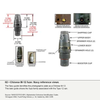
This Chinese Type 12 mortar-fuze storage can preserves a specialized piece of Cold War ammunition packaging. It is offered as an empty container with its screw-on lid and fitted internal retaining insert. The Chinese identification stencil connects the can to the Type 12 fuze, China's version of the Soviet M-12.
Identification and Features
- Screw-on lid with white Chinese identification stencil
- Internal retaining insert for supporting the fuze
- Worn lower stencil with partially readable numbers
Function
The can protected and supported its contents during storage and shipping. Its screw-on lid closed the container, while the fitted insert held the fuze in position and limited movement inside. The exterior stencil allowed supply personnel to identify the intended contents without opening the can. Together, the closure, insert, and labeling served the practical needs of ammunition handling.
Documented End-Item Application
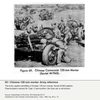
The U.S. military's 1968 Communist Bloc Projected Munition Fuzes in Vietnam, page 4-33, identifies the Chinese Type 12 for use in 120mm mortar ammunition. It specifically lists the Chinese 120mm Type 53 mortar and fragmentation high-explosive projectiles. This establishes the ammunition-system connection behind the container's Type 12 marking.
Product History
This storage can belongs to the support equipment for China's Type 12 mortar-fuze family. By 1968, that design was included in U.S. technical intelligence references. The Chinese-language stencil preserves its identification within the original supply system, while the surviving insert records the packing arrangement. These features give the can historical value as ammunition packaging, alongside the fuzes and projectiles it supported.
Parent-Equipment History
The Soviet M-12 fuze family dates to the later 1950s. The 1968 U.S. guide described China's Type 12 as a copy of that design, interchangeable with its Soviet counterpart in 120mm ammunition. Service fuzes had instantaneous and delay impact action. The same guide reported that the Type 12 was replacing the older Chinese Type 7 artillery fuze in 120mm mortar applications.
Weapon-System Background
The Chinese 120mm Type 53 mortar followed the Soviet M1943 design. Introduced in 1943 during World War II, the M1943 developed from the earlier M1938 heavy mortar. Its smoothbore, muzzle-loading layout used a barrel, bipod, and baseplate, with a wheeled carriage for transport. Chinese production carried this Soviet heavy-mortar pattern into the Cold War, linking the Type 12 fuze and its packaging to a weapon family with wartime roots.
History of Use
During the Vietnam War, U.S. specialists compiled identification guides for Chinese and Soviet fuzes encountered in the conflict. The Type 12 appeared in the 1968 reference used to support intelligence, ordnance, and explosive ordnance disposal work. Its inclusion places the fuze family within the war's documented ammunition history. Containers such as this one illustrate the storage and transport equipment behind those ammunition supplies.
Condition
The container retains its screw-on lid and internal retaining insert. White identification lettering remains on the lid, and the lower stencil is worn and only partly readable. Please check the pictures for the general condition of the item.
Ideal For
The Chinese stencil and retained insert make this can a useful companion to fuze collections and ammunition displays. It also adds a practical supply and transport element to exhibits that trace Soviet weapon designs and their Chinese counterparts.
- Chinese Cold War military collections
- Type 12 and M-12 fuze reference displays
- 120mm mortar ammunition exhibits
- Military packaging and ammunition-logistics collections
- Museums and educational displays covering Vietnam War ordnance
Approx length 5", Approx width 2", Approx height 2", Approx weight 0.3lbs.
Please visit our page about order lead times here: Order Lead Times.