




Description
AIM-9 Sidewinder Guidance-and-Control Pneumatic Filter Screen, FSN 1420-874-4911
Item Overview
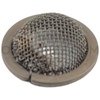
This original AIM-9 Sidewinder filter screen is a small wire-mesh disk used in the missile’s guidance-and-control system. It protected the hot-gas pneumatic system from particles that could block a flow restrictor or small servo passages.
The official military name is simply SCREEN. It is a mechanical filtering disk, not an electronic screen, display, sensor, circuit board, or seeker component.
This is a non-explosive internal missile part. It is not a fuze, warhead, motor, initiator, or other energetic item.
Identification and Features
- Official nomenclature: SCREEN
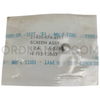
- Package marking: Z1420-874-4911
- Period Federal Stock Number: 1420-874-4911
- National Stock Number: 1420-00-874-4911
- NIIN: 00-874-4911
- Original drawings/part numbers: 1652960 and 1652960PC1
- Later revised drawing: 1652960-1
- Component type: Wire-mesh fluid-filtering disk
- Parent system: AIM-9 Sidewinder guidance-and-control section
- Stock-number assignment date: January 1, 1962
- Package date marking: A-5/62
- Quantity in individual packet: One
- Original master-carton quantity: 100
- Additional package number: N195-13863
- Classification: Non-explosive mechanical missile component
The Z1420-874-4911 marking uses the older stock-number format. The modern number adds the National Codification Bureau code “00,” producing NSN 1420-00-874-4911.
The A-5/62 package marking appears to indicate packaging or inspection in May 1962. The exact purpose of N195-13863 has not been confirmed; it may be a lot, order, or contract-control number.
The later 1652960-1 revision was cataloged as a Filtering Disk, Fluid. This record helps confirm the physical purpose of the earlier 1652960 screen.
Function
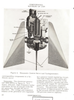
Early Sidewinder missiles used hot gas from a small internal gas generator to power the pneumatic control system. The gas entered a manifold and moved the pistons that controlled the missile’s forward steering fins.
Military technical material describes four small metering orifices in the pneumatic servo system. These openings were only about 0.019 inch in diameter. Even a small particle could reduce gas flow, block an orifice, or affect servo response.
The wire-mesh screen was installed in the gas-flow path near a restrictor or metering passage. It caught loose particles before they could enter these narrow openings. Although very small, the screen helped protect a system that had to operate quickly and evenly during the missile’s short flight.
Historical Background
The Sidewinder began as a U.S. Navy project at the Naval Ordnance Test Station at China Lake, California. Development started during the early 1950s under a team led by Dr. William B. McLean.
The first fully configured Sidewinder was fired in September 1952. A missile completed a successful interception against an unmanned target aircraft in September 1953. The weapon later entered operational service as a short-range, infrared-guided air-to-air missile.
This screen’s 1962 packaging date places it within the early Sidewinder service period. Its likely application was the Sidewinder 1A, known in U.S. Air Force service as the GAR-8 and soon standardized as the AIM-9B.
The AIM-9B used an infrared seeker to follow heat from an aircraft. Guidance signals controlled pneumatic servos that moved the forward fins. Early manuals specifically document filters in the servo cylinders and show the hot-gas manifold, pistons, metering orifices, and control fins.
The AIM-9B was carried by aircraft such as the F-4 Phantom II, F-8 Crusader, F-100 Super Sabre, F-102 Delta Dagger, and F-104 Starfighter. It saw combat during the Vietnam War and became the foundation for several improved Sidewinder versions.
A later revision of this filtering disk is documented with the AIM-9E, an improved U.S. Air Force version developed from the AIM-9B. This connection shows how the basic pneumatic filtering design remained useful as the Sidewinder system evolved.
Packaging Note
The individual military packet contains one screen. The original military master carton held 100 packets.
A Dunkin’ Donuts carton seen with the inventory was reused only for storage. It is not original military packaging and does not identify the manufacturer or military application.
Condition
These are original military-surplus filter screens in period packaging. The packet may show age-related stains, fading, creases, tears, handwriting, tape, or storage wear.
The wire-mesh disk may have light discoloration, surface residue, or minor handling marks. Please review the product pictures for the represented condition and package markings.
This listing is for one filter screen in its individual packet. The master carton, AIM-9 missile, guidance section, manifold, flow restrictor, servo assembly, and other components are not included unless pictured or specifically stated.
Ideal For
- AIM-9 Sidewinder collections
- Early guided-missile displays
- AIM-9B and GAR-8 historical exhibits
- AIM-9E research and restoration displays
- Vietnam War aviation collections
- Military packaging and stock-number studies
- Guided-missile engineering collections
- Museums and educational exhibits
Approx length 0.25", Approx width 0.25", Approx height 0.25", Approx weight 0.01 lbs.
Pictures are stock images of our inventory. Unless otherwise noted, you will not be receiving the exact item shown in the pictures. The pictures are representative of the item’s general condition. The item you receive might be slightly better, or worse, condition than was shown in the pictures.
Please visit our page about order lead times here: Order Lead Times