








Description
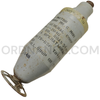
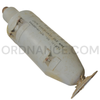
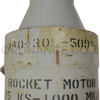
Aerojet Mark 6 Mod 1 RATO/JATO Solid-Fuel Rocket Motor – 15KS-1000
Item Overview
This inert Aerojet Mark 6 Mod 1 rocket motor belongs to the 15KS-1000 family of aircraft takeoff boosters. It supplied extra thrust during departure, helping military aircraft leave the runway with heavy loads or limited takeoff space. This U.S. Air Force aviation collectible connects Cold War bomber operations with the long service history of rocket-assisted military airlift.
Identification and Features
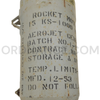
Military specification MIL-J-7093A identifies the Mark 6 Mod 1 as a 15KS-1000 solid-propellant JATO motor. The military designation and performance designation identify the same motor type.
- Military designation: Mark 6 Mod 1
- Motor designation: 15KS-1000, also written 15-KS-1000
- Manufacturer: Aerojet-General Corporation
- Original propulsion type: Smokeless solid propellant
- Rated thrust: 1,000 pounds of thrust
- Nominal burn duration: 15 seconds
- Original role: Aircraft takeoff assistance
Function
In service, the motor burned solid propellant and directed hot gas through its nozzle to create thrust. Several units could add their thrust to that of the aircraft's main engines during the takeoff run. RATO means rocket-assisted takeoff. The same role is often called JATO, or jet-assisted takeoff, even when rockets supply the extra push.
Documented End-Item Application
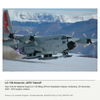
The 15KS-1000 family is documented in military aircraft takeoff-assist service. An official Dyess Air Force Base aircraft guide lists a C-130 installation capable of carrying eight Aerojet-General 15KS-1000 units. These boosters supported the Hercules' ability to depart from short or difficult runways. The B-47 Stratojet provides another important example of the wider use of rocket-assisted takeoff in military aviation.
Product History
The Mark 6 Mod 1 appears in MIL-J-7093A, dated September 8, 1964, which replaced a specification dated August 9, 1955. A further amendment was issued on June 3, 1982. These records trace formal military requirements for the motor across several decades of the Cold War.
Production and Museum History
The Smithsonian's National Air and Space Museum records approximately 256,000 motors produced in the 15-KS-1000 family. It also identifies the design as a smokeless Aerojet unit used to boost military and commercial aircraft. Aerojet donated a reference example to the museum in 1968, preserving the design as part of the history of aircraft rocket propulsion.
Equipment History
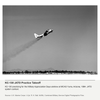
American aircraft takeoff-assist research was already producing flight results before the United States entered World War II. NASA records a rocket-assisted aircraft takeoff at March Field, California, on August 12, 1941. Later military programs developed the idea into practical booster installations. Compact rocket motors gave aircraft a brief increase in thrust without requiring larger main engines for the entire flight.
Early B-47 RATO Installation
Early B-47 Stratojets needed extra help during heavily loaded takeoffs because their turbojets supplied limited thrust at low speed. Their initial installation accommodated 18 rocket bottles in the rear fuselage. Nine fitted on each side, arranged in three rows of three. The combined boost helped the bomber build speed during departure.
Parent Weapon-System Background
The Boeing B-47 was a six-engine, swept-wing jet bomber developed for the U.S. Air Force's Cold War strategic mission. It first flew on December 17, 1947. The Lockheed C-130 Hercules followed a different mission: moving troops, equipment, and supplies from rough airfields. Its four turboprop engines and rugged landing gear suited tactical airlift. Rocket assistance addressed difficult takeoff conditions across these very different aircraft roles.
History of Use
The Smithsonian records the use of multiple 15-KS-1000 units to help bombers take off during the Korean War. In later decades, Hercules crews used rocket assistance for demanding departures, including short, unimproved runways. The Blue Angels' Marine-crewed C-130, Fat Albert, also made the system widely known through public demonstrations. Its first Blue Angels JATO performance took place in November 1975, using eight bottles rated at 1,000 pounds of thrust each. Its final JATO demonstration was in November 2009.
Modern-Era Service Context
Rocket-assisted takeoff remained relevant to specialized Hercules missions well into the 21st century. A 2024 Air National Guard modernization plan described JATO rockets as the existing method for LC-130H takeoffs from deep-snow runways. The same plan stated that those motors were no longer being produced and called for propulsion upgrades. This dated record connects the broader JATO story with modern polar airlift operations.
Condition
This motor is offered as an inert military collectible. Please check the pictures for the general condition of the item.
Ideal For
This motor suits exhibits about aircraft propulsion, takeoff performance, and the practical demands of military flying. Displayed beside aircraft photographs or technical references, it helps explain how a short rocket boost supported both heavy bombers and tactical transports.
- Cold War aviation collectors
- B-47 and C-130 history displays
- Aircraft and rocket propulsion museums
- Military aviation researchers
Approx length 34", Approx width 12", Approx height 12", Approx weight 70lbs.
Please visit our page about order lead times here: Order Lead Times.