


Description
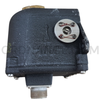
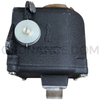
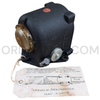
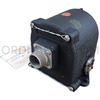
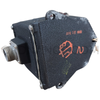
World War II Aircraft IFF Self-Destruct Impact Switchbox BC-706-D, NAF-48079
Item Overview
This original World War II Switchbox BC-706-D was an automatic impact or inertia switch used in military aircraft IFF self-destruct systems.
During a severe crash, an internal weighted pendulum moved in response to horizontal shock and closed an electrical circuit. That circuit activated a separate destructor charge installed inside the aircraft’s classified Identification Friend or Foe radio equipment.
The BC-706-D switchbox does not contain an explosive. It was an electrical triggering device connected to a separate destructor unit elsewhere in the aircraft.
Identification and Features
- Official nomenclature: Switchbox BC-706-D
- Equipment type: Aircraft impact or inertia switch
- Navy/Bureau of Aeronautics identifier: NAF-48079
- Manufacturer: Federal Manufacturing and Engineering Corporation
- Manufacturer location: Brooklyn, New York
- Apparent date marking: April 1943
- Primary role: Automatic closing of an IFF destructor circuit after a severe crash
- Internal mechanism: Weighted pendulum and electrical contacts
- Mounting position: Vertical with the transparent cap uppermost
- Instruction-tag connections: Terminals A and B connected to Navy detonator junction box “D”
- Associated systems: SCR-595, SCR-695, Navy ABK and ABK-1 IFF equipment
- Explosive content: None
NAF-48079 is an equipment or drawing identifier, not a serial number.
How It Worked
The BC-706-D contained a pendulum that reacted to a strong impact in the horizontal plane of the aircraft. A crash force of sufficient strength moved the pendulum and closed the switch’s internal electrical contacts.
Closing those contacts completed the aircraft’s destructor circuit. Electrical power then traveled to a separate detonator or destructor charge mounted inside the classified IFF radio receiver. The charge damaged the radio’s internal parts so enemy personnel could not study or reuse the equipment.
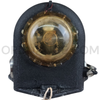
The BC-706 was mounted vertically with its cap at the top. The pendulum could be viewed through the transparent cap and reset during authorized testing or maintenance.
The system could also include a separate BC-765 manual destruct switch with two protected push buttons. The BC-765 allowed the crew to activate the destructor circuit manually, while the BC-706 provided automatic activation if a crash left the crew unable to operate the manual controls.
Navy IFF Installation
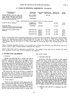
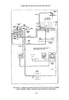
The instruction tag on this example directs terminals A and B to Navy detonator junction box “D.” This matches the 1943 wiring diagram for Navy ABK and ABK-1 aircraft IFF installations.
In that system, the impact switch connected through a terminal block and indicator mounting to junction box “D.” The junction box completed the connection to the separate destructor plug installed in the IFF receiver.
The switchbox, junction box, wiring, indicator, and destructor unit were separate parts of the complete aircraft installation.
Historical Background
Identification Friend or Foe equipment allowed Allied radar operators to identify friendly aircraft. A ground or shipboard radar sent a coded challenge, and the aircraft’s IFF transponder answered with a signal that identified it as friendly.
Because IFF equipment used classified circuits, codes, and operating methods, it could not be allowed to fall into enemy hands intact. Aircraft installations therefore included both manual and automatic methods for destroying the radio equipment.
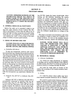
The U.S. Navy’s wartime Radar Operator’s Manual explained that the pilot could activate the destructor before landing in hostile territory. If the crew was killed or the aircraft crashed, the automatic impact switch activated the circuit instead.
The BC-706 family is documented in SCR-595 and SCR-695 installations. Technical Order 01-40A-55 also records the relocation of BC-706-series switchboxes in Douglas A-20B, A-20C, and early A-20G aircraft.
The BC-706 series was used in more than one type of military aircraft. The markings on this example do not identify one specific airframe.
The faded April 1943 stencil places this switchbox within the wartime production period. Federal Manufacturing and Engineering Corporation of Brooklyn produced military electrical and radio-related equipment in addition to its civilian photographic products.
Condition
This is original World War II military-surplus electrical equipment. It may show finish wear, scratches, oxidation, staining, faded markings, aged wiring, discoloration, dirt, or other signs of long-term storage.
The transparent cap, pendulum, terminals, instruction tag, and other hardware may show age or storage wear. Internal electrical operation has not been tested or confirmed unless specifically stated on the product page.
This switchbox contains no explosive, detonator, or destructor charge. It is offered as an inert historic aircraft component, restoration reference, or display item.
The IFF receiver, destructor charge, detonator, junction box, indicator, manual destruct switch, wiring, aircraft, and other components are not included unless pictured or specifically stated.
Ideal For
- World War II aircraft restoration projects
- SCR-595 and SCR-695 IFF displays
- Navy ABK and ABK-1 equipment collections
- Douglas A-20 restoration research
- Army Air Forces and U.S. Navy aviation collections
- Military radio and radar exhibits
- Aircraft electrical-component collections
- Military museums and educational displays
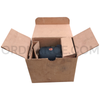
Approx length 7", Approx width 6", Approx height 5", Approx weight 1.7lbs.
Pictures are stock images of our inventory. Unless otherwise noted, you will not be receiving the exact item shown in the pictures. The pictures are representative of the item’s general condition. The item you receive might be slightly better, or worse, condition than was shown in the pictures.
Please visit our page about order lead times here: Order Lead Times.