






Description
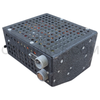
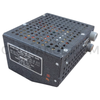
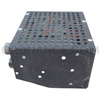
USAF Type D-2 Model 4121-2 Gun-Bomb-Rocket Sight Power Unit Control Section, Varo
Item Overview
This U.S. Air Force Type D-2 control section was part of the Model 4121 power unit made by Varo Manufacturing Company of Garland, Texas. It supplied regulated electrical power for Type A-1 and A-4 gyro-computing gun, bomb, and rocket sights. This is Varo part 4121-2, the Control Section only. It is not the optical sight, and it contains no explosive material.
Identification and Features
Official Air Force publications identify the complete equipment as the Type D-2 Power Unit, Model 4121. The complete installation used two separate electrical boxes joined by an interconnecting cable.
- Equipment: Type D-2 Power Unit, Model 4121
- Manufacturer: Varo Manufacturing Company, Garland, Texas
- Part number: 4121-2
- Section: Control Section
- Companion component: 4121-1 Power Section
- Aircraft input: 28-volt DC
- Marked principal output: 28-volt AC, 400 Hz, three-phase, 90 VA
- Sight applications: Type A-1 and A-4 gun-bomb-rocket computing sights
- Status: Historical aircraft electrical component
How the Power Unit Worked
The complete Model 4121 power unit converted an aircraft’s 28-volt direct current into the regulated 400-Hz alternating current required by the sight system. The companion 4121-1 Power Section produced the AC supply, while this 4121-2 Control Section helped convert and regulate that output. Its transformers, reactors, capacitors, and vacuum-tube regulator circuits provided stable power for the sight’s gyros, servos, and analog computing mechanisms.
Complete Installation
A complete Type D-2 installation included the 4121-1 Power Section, the 4121-2 Control Section, an interconnecting cable, and a shock-mounted carrier. These parts worked together as one aircraft power system. This listing is for the 4121-2 Control Section only; the power section, cable, mounting carrier, sight, and other aircraft equipment are not included unless specifically pictured or stated.
Sight and Aircraft Applications
The A-1 and A-4 were early Cold War computing sights designed to improve the accuracy of fixed aircraft guns, bombs, and rockets. Gyros sensed aircraft movement while mechanical and electrical computing parts helped the pilot estimate the correct aiming point. Official F-86 maintenance literature documents A-1CM and A-4 sight installations using a 28-volt, three-phase, 400-Hz armament power supply. This gives the Type D-2 family a credible connection to early F-86 Sabre installations, although use in a specific aircraft should be confirmed through the correct aircraft technical order.
Historical Background
Computing sights became important as jet aircraft reached speeds that made simple fixed sights less useful. During the 1950s, the U.S. Air Force adopted sight systems that could support several missions from one cockpit unit. The A-1 and later A-4 families helped pilots aim guns during air combat and deliver bombs or rockets against ground targets. The official overhaul manual and illustrated parts breakdown for Varo Model 4121 were both issued on December 1, 1956, placing this equipment firmly in the early Cold War period.
Condition
This is a vintage military-surplus electrical component offered for collecting, research, restoration, or display. It may show scratches, chipped paint, dents, corrosion, faded markings, aged seals, repairs, or other signs of service and storage. Internal condition and electrical operation are not guaranteed. Do not connect the unit to electrical power without inspection by a qualified technician.
Ideal For
This control section is well suited for collections and exhibits focused on early jet aircraft, Cold War avionics, USAF armament systems, and mechanical computing sights.
- F-86 Sabre and early jet displays
- USAF armament collections
- A-1 and A-4 computing-sight exhibits
- Cold War avionics research
- Aircraft restoration references
- Military museums and educational displays
Approx length 8", Approx width 8", Approx height 5", Approx weight 9.7lbs.
Pictures are stock images of our inventory. Unless otherwise noted, you will not be receiving the exact item shown in the pictures. The pictures are representative of the item’s general condition. The item you receive might be slightly better, or worse, condition than was shown in the pictures.
Please visit our page about order lead times here: Order Lead Times