







Description
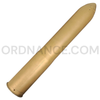
U.S. 75mm M2A2 Drill Cartridge with M1907M Fuze and Removable Base
This U.S. 75mm M2A2 drill cartridge features an M1907M fuze and a removable base stamped for the 75mm M1 howitzer and Model 1916 field gun. Its bronze construction and marked base make it a useful example of American artillery training equipment for collection, research, and display.
Identification & Features
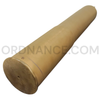
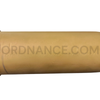
The base is stamped “CARTRIDGE BASE FOR 75MM HOW M1 & FG MOD 1916.” This inscription identifies the base’s stated application to both weapons. M1907M identifies the fuze; the field gun named in the base inscription is the Model 1916.
- 75MM: The caliber of the associated artillery weapons.
- HOW M1: Howitzer M1, the 75mm pack howitzer.
- FG MOD 1916: Field Gun Model 1916. The year forms part of the gun’s designation.
- Construction: A one-piece bronze body representing the projectile and cartridge case, with a detachable base and separate inert fuze.
Drill Cartridge Development and Use
The M2A2 was purpose-built for artillery handling and loading instruction. The Army’s June 1941 manual lists it for the M1 and M1A1 pack howitzers with an inert M1907M fuze, alongside the earlier M2A1 drill cartridge fitted with an inert M1907 fuze. The M1907M represented the combination time-and-percussion fuze associated with service shrapnel ammunition. The M2A2 remained documented in the Army’s 1944 artillery ammunition manual, which describes its bronze body, detachable base, and completely inert construction. These drill rounds allowed crews to rehearse ammunition handling and loading without expending service ammunition.
M1 Pack Howitzer History
The M1 pack howitzer grew from the Army’s effort to replace its older 2.95-inch mountain gun with a more capable weapon that could still be transported in separate pack loads. Development continued through the experimental M1920 and subsequent designs before the M1 was standardized in 1927. Improvements followed in the M1A1. The pack howitzer’s portability also suited amphibious operations: Marine units used the weapon extensively during World War II, including the Guadalcanal campaign and later Pacific landings.
Model 1916 Field Gun History
The Model 1916 field gun named on the base developed from American 3-inch gun work and was adapted to 75mm as the United States sought ammunition compatibility with its allies during World War I. Its split-trail carriage was intended to provide greater elevation and traverse. Production and design problems limited the wartime program, but the M1916 remained among the Army’s 75mm field-gun types during the interwar years. Experience with its development contributed to later American 75mm gun designs.
Condition
The M1907M fuze and removable base are included. All ordnance is inert. Please check the pictures for the general condition of the item.
Ideal For
This drill cartridge suits collections and exhibits focused on American artillery training and equipment identification.
- M1 and M1A1 pack-howitzer displays.
- Study of cartridge-base markings naming the Model 1916 field gun.
- Collections of bronze drill ammunition and inert artillery fuzes.
- Museum exhibits explaining artillery crew training.
Approx length21", Approx width 3.5", Approx height 3.5", Approx weight 20lbs.
Please visit our page about order lead times here: Order Lead Times.