




Description
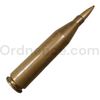
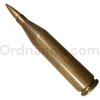
German WWII 7.92mm Patrone 318 Armor-Piercing Round with 1940 Polte Case
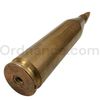
This German 7.92mm Patrone 318 armor-piercing round features a Polte-manufactured case dated 1940, with lot and military acceptance markings. The 7.92×94mm cartridge served in the Panzerbüchse 38 and Panzerbüchse 39, Germany’s infantry anti-tank rifles of the early Second World War. Offered inert for collection and display, this example combines a documented ammunition type with identifiable German wartime case production.
Identification & Features
The Patrone 318 has a large, rimless bottlenecked case supporting a comparatively small 7.92mm projectile. Its distinctive proportions separate it from ordinary German rifle ammunition. The supplied case markings identify the manufacturer, production year, lot, and military acceptance.
- P: Polte Armaturen- und Maschinenfabrik A.G., Magdeburg, the case manufacturer.
- 40: 1940, the case’s manufacturing year.
- 1a: Lot 1, sub-lot a. The final character is a lowercase a.
- Eagle over WaA700: German military inspection and acceptance marking associated with Polte production during this period.
Armor-Piercing Projectile and Service Specifications
Wartime ammunition references describe Patrone 318 service projectiles with a metal jacket surrounding a tungsten-carbide core. The hard core provided the penetrating element, while the cartridge’s high velocity supplied the impact energy. Published specifications for the service ammunition give a projectile weight of approximately 14.5 grams and a muzzle velocity of approximately 1,210 meters per second in the associated anti-tank rifles.
Development of the Patrone 318
The 7.92×94mm cartridge emerged in 1938 during Germany’s renewed development of infantry anti-tank rifles. Its design paired a large case with a small-caliber penetrating projectile, pursuing high velocity in a weapon that infantry could carry. This approach differed from the much larger 13.2mm bullet used by Germany’s First World War Tankgewehr. The designation Patrone 318, commonly shortened to Patr. 318 on ammunition labels, distinguished this specialized ammunition from standard 7.92×57mm rifle and machine-gun cartridges. The ammunition family also included practice loadings for training.
Panzerbüchse 38 and Panzerbüchse 39
The principal applications were the PzB 38 and PzB 39, both single-shot, falling-block anti-tank rifles equipped with bipods, folding shoulder stocks, and muzzle brakes. The earlier PzB 38 used recoil to assist extraction of the fired case. The PzB 39 simplified the mechanism with manual operation while retaining the same ammunition. Contemporary U.S. ordnance reports describe the PzB 38 as roughly seven pounds heavier and more mechanically elaborate than its successor. The PzB 39 therefore continued the same ammunition system in a lighter, simpler weapon suited to infantry service.
Early Wartime Role and Use
These rifles gave German infantry a portable weapon for engaging lightly armored vehicles during the early years of World War II. Archival photographs document the PzB 39 with German troops on the Eastern Front in 1941. Its ammunition depended on the penetration of a small, fast projectile, and increasing tank protection reduced the usefulness of that approach. The history of the Patrone 318 reflects the rapid changes in armor and anti-tank weapons during the war, when ammunition developed for relatively thin protection soon faced much more demanding targets.
Later Granatbüchse 39 Conversion
As the anti-tank rifle’s effectiveness declined, Germany adapted surviving PzB 39 weapons into the Granatbüchse 39, or GrB 39, rifle-grenade launcher. U.S. wartime intelligence documented this conversion by November 1943. It extended the equipment’s service through the use of anti-tank rifle grenades and their dedicated launching cartridges. This was a later application of the rifle itself: the armor-piercing Patrone 318 offered here represents its original projectile-firing role, rather than the specialized ammunition used to launch grenades.
Condition
All ordnance is inert. Please check the pictures for the general condition of the item.
Ideal For
The dated Polte case and acceptance markings provide specific points of interest for ammunition collectors and historical displays.
- Panzerbüchse 38 and Panzerbüchse 39 equipment displays.
- Polte ammunition, headstamp, and Waffenamt marking collections.
- Museum exhibits tracing German infantry anti-tank weapon development.
- Comparisons of First and Second World War anti-tank rifle ammunition.
Approx length 4.5", Approx width 1", Approx height 1", Approx weight .1lbs.
Pictures are stock images of our inventory. Unless otherwise noted, you will not be receiving the exact item shown in the pictures. The pictures are representative of the item’s general condition. The item you receive might be slightly better, or worse, condition than was shown in the pictures.
Please visit our page about order lead times here: Order Lead Times.