






Description
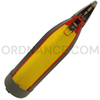
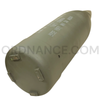
5-Inch Mk 10 Rocket Warhead with Mk 30 Mod 4 Fuze Cutaway
Item Overview
This 5-inch Mk 10 rocket warhead cutaway with Mk 30 Mod 4 fuze displays a documented combination from the U.S. Navy’s surface-rocket family. The sectioned format opens the normally enclosed assembly for closer study. It connects the design of a naval bombardment warhead with the impact fuze that controlled its action.
Identification and Features
The 5-inch designation is the nominal caliber, equal to 127 mm. Navy manuals call the warhead a “rocket head” and identify its nose fuze by a separate mark and modification number.
- Warhead: 5-inch Rocket Head Mk 10
- Nose fuze: Mk 30 Mod 4
- Historical type: high-capacity, high-explosive rocket head
- Parent system: Navy 5-inch spin-stabilized surface rockets
- Display format: inert cutaway
- Navy fuze reference: general arrangement drawing 562339
Function and Cutaway Contents
In service, the Mk 10 head carried the rocket’s main explosive charge, which produced blast and fragments against surface targets. The Mk 30 Mod 4 was a point-detonating nose fuze designed for superquick, or immediate, action on impact. It worked with an auxiliary detonating fuze inside the head. The cutaway presents the warhead and nose fuze as a study piece, helping viewers understand their positions and separate roles within the assembly.
Documented Applications
The Navy’s 1958 Surface Rockets manual documents Mk 10 heads with Mk 30 Mod 3 or Mod 4 nose fuzes in complete 5-inch Mk 10 high-explosive surface rockets. These rounds combined the head with a Mk 4 rocket motor and were used against shore installations or for concentrated barrages. The manual lists a maximum range of 4,620 yards for the complete Mk 10 rocket. That figure describes the historical service round.
Product History
The Mk 10 high-capacity head formed part of the Navy’s World War II barrage-rocket program. Its design placed greater emphasis on explosive capacity than the thick-walled general-purpose Mk 7 head. Postwar manuals record several Mk 10 modifications with changes in body construction and fuze arrangements. By 1958, older Mods 6 and 7 were no longer being produced, while later versions remained documented for naval use.
Mk 30 Mod 4 Fuze History
The Mk 30 family began as a nose-fuze design for gun-fired projectiles and was adapted for spin-stabilized rockets. Mod 4 used a drawn steel nose covering, called an ogive, in place of the plastic covering found on Mod 3. The Navy’s 1947 ordnance manual explains that shortages of plastic ogives led to the steel version. Mod 4 was restricted to rocket use, giving it a distinct place within the broader Mk 30 fuze family.
Equipment History
The Navy’s 1953 launcher catalog lists complete Mk 10 rockets for the Mk 50, Mk 51, and Mk 102 launchers. The eight-tube Mk 50 armed motor torpedo boats, commonly called PT boats. The gravity-fed Mk 51 supported amphibious and landing craft. The powered Mk 102 equipped Landing Ship Medium, Rocket vessels, or LSM(R)s, and used ammunition hoists below deck to support continued firing. This equipment allowed related rocket ammunition to serve both small boats and dedicated bombardment ships.
Weapon-System Background
Development of the Navy’s longer-range spin-stabilized barrage rockets began at the California Institute of Technology in late 1943 and early 1944. These rockets used rotation to help steady their flight instead of external fins. The program addressed the need to reach shore targets when reefs or beach obstacles kept support vessels farther offshore. A family of rocket heads and motors gave the Navy different options for explosive bombardment, smoke, and other support missions.
History of Use
Five-inch spin-stabilized barrage rockets saw combat during the Okinawa campaign in 1945, supporting landings and attacks on Japanese shore positions. The wider naval rocket system continued serving after World War II. During the Korean War, LSMR-401, later named USS Big Black River, joined other rocket ships in supporting the Inchon landings in September 1950. Five-inch rocket support also continued during the Vietnam War, including operations by USS Carronade and USS St. Francis River. These campaigns trace the service history of the rocket family associated with this cutaway.
Condition
The warhead and Mk 30 Mod 4 fuze are offered as an inert cutaway for display and study. The sectioned condition is an intentional feature that exposes the assembly’s interior.
Ideal For
Pair this cutaway with period rocket manuals or launcher photographs to explain how naval rocket components worked together. It suits collections and exhibits centered on naval fire support and ammunition design.
- Naval ordnance collectors
- Military history exhibits
- Rocket and fuze researchers
- Educational displays
Approx length 19", Approx width 5", Approx height 5", Approx weight 22lbs.
Pictures are stock images of our inventory. Unless otherwise noted, you will not be receiving the exact item shown in the pictures. The pictures are representative of the item’s general condition. The item you receive might be slightly better, or worse, condition than was shown in the pictures.
Please visit our page about order lead times here: Order Lead Times.