




Description
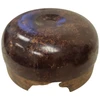
U.S. Navy 5-Inch/38 Mark 7 Mod 0 Closing Plug — 1948
Dated 1948 and bearing the HPCO and Lot 28 markings, this U.S. Navy Mark 7 Mod 0 closing plug belongs to the cartridge-case assembly used with 5-inch/38 ammunition. This Bakelite plug closed the mouth of the case containing the propelling charge. Offered as an individual inert component, it represents the ammunition fittings that supported one of the Navy’s most widely used gun systems.
Markings and Identification
The top is stamped “5 IN MK.7 MOD 0 LOT 28 HPCO 1948”. These markings identify the 5-inch application, Mark 7 Mod 0 plug designation, production lot, HPCO manufacturer, and 1948 date. The Mark 7 Mod 0 is cataloged as a bakelite propelling-charge plug for the 5-inch/38 cartridge case. Its date places this example in the early postwar period, when ships armed with the wartime gun system remained a major part of the fleet.
Role in 5-Inch/38 Ammunition
The 5-inch/38 used a separate projectile and a metal cartridge case containing the primer and propelling charge, an arrangement described as semifixed ammunition in contemporary Navy manuals. Because the projectile was separate from the case, the case needed its own mouth closure. The plug retained the contents during handling and loading and provided a buffer where the cartridge met the projectile. It formed part of the propelling cartridge, distinct from the projectile’s fuze or any protective cap fitted over its nose.
From Cork to Plastic Closures
Cork plugs were established components of Navy semifixed ammunition before plastic closures became available. The Navy’s 1945 ammunition reference described a plastic replacement designed to break into small pieces during firing. This development gave ammunition manufacturers another material for a closure that had to withstand routine handling while remaining expendable when the gun fired. Later Navy manuals continued to describe both cork and plastic mouth plugs. The Mark 7 Mod 0 represents the plastic type within this broader development of cartridge-case closures.
Development of the 5-Inch/38 Gun System
The 5-inch/38 dual-purpose gun entered fleet service with the Farragut-class destroyers completed in 1934–1935. It combined the ability to engage surface targets with the high-angle fire needed against aircraft. During World War II, the system became standard equipment across many U.S. warship classes, serving as a destroyer main battery and as secondary armament on larger ships. Single and twin mounts allowed the Navy to adapt the same gun and ammunition system to different ship sizes and defensive roles.
Shipboard Applications and Continued Service
Fletcher-class destroyers carried five single 5-inch/38 mounts, while the following Allen M. Sumner class carried six guns in three twin mounts. The twin arrangement increased the number of guns that could fire forward without requiring additional mount positions. The system remained useful long after World War II: Navy records from Vietnam document 5-inch/38 batteries providing shore bombardment and night illumination, including aboard the cruiser USS Saint Paul in 1966. Its long service life gives ammunition components such as this plug a place in both wartime-system and postwar naval collections.
Condition
All ordnance is inert. Please check the pictures for the general condition of the item.
Ideal For
This closing plug suits collections and exhibits that explain the separate components of naval gun ammunition.
- U.S. Navy 5-inch/38 cartridge-case displays.
- Collections of dated naval ammunition components and maker markings.
- Museum exhibits showing projectile and propelling-cartridge arrangements.
- Research comparisons of cork and plastic cartridge closures.
Approx length 5.25", Approx width 5.25", Approx height 3", Approx weight 0.6lbs.
Pictures are stock images of our inventory. Unless otherwise noted, you will not be receiving the exact item shown in the pictures. The pictures are representative of the item’s general condition. The item you receive might be slightly better, or worse, condition than was shown in the pictures.
Please visit our page about order lead times here: Order Lead Times.