





Description
U.S. 4.7-Inch 60-Pound Common Shrapnel Projectile for the M1906 Field Gun — Fired, with Model 1914-15 Fuze
Product Overview
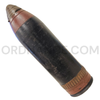
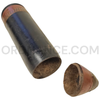
This U.S. 4.7-inch common shrapnel projectile represents the 60-pound ammunition used in the Model 1906 field gun. It is fitted with a Model 1914-15 combination time-and-percussion nose fuze. The separate head, thin-walled body, and copper driving band match the construction documented in the Army’s period handbook. This artillery collectible connects American ammunition design with the larger field guns developed before the First World War.
Identification and Features
The construction closely matches the shrapnel described on page 21 and illustrated in Plate III of the Army’s M1906 gun handbook.
- Type: U.S. 4.7-inch common shrapnel projectile.
- Associated weapon: Model 1906 field gun.
- Nose assembly: Large, separate head fitted with a ringed Model 1914-15 combination fuze.
- Body construction: Thin-walled body with a central connection beneath the head, consistent with the internal tube arrangement.
- Driving band: Copper band with deep rifling impressions that establish fired condition.
Function
In its original service form, common shrapnel carried preformed balls for use against troops in the open. When the projectile functioned, its head separated and the balls were expelled forward. The body was designed to remain largely intact, which explains how fired shrapnel bodies can survive as recognizable artifacts. A central tube linked the nose fuze with the base charge, while the driving band gave the projectile a stabilizing spin during firing.
Combination Fuze
The fitted Model 1914-15 nose fuze is a combination time-and-percussion type. In original service, the time function allowed the projectile to open during flight, while the percussion function provided action on impact. Its ringed form reflects the period’s adjustable time-fuze design, which gave artillery crews control over when shrapnel opened along its flight path.
Documented End-Item Application
The documented application is the U.S. 4.7-inch field gun, Model 1906. The Army supplied this gun with several ammunition types, including common shrapnel and common steel shell. Its ammunition used a projectile secured to a metallic cartridge case as a fixed round. The item offered here is the shrapnel projectile with its nose fuze, representing the part of that ammunition assembly that traveled downrange.
Product History
The period handbook records the original service filling as 711 preformed balls. It gives the complete projectile’s loaded weight, including its filling and fuze, as 60 pounds. That figure is the historical weight designation rather than the present weight of this fired example. The documented pattern belongs to the early 20th-century period when common shrapnel held an important place in field-artillery ammunition supplies.
Equipment History
The M1906 was an American-designed field gun developed before World War I to provide heavier projectiles and greater reach than lighter field artillery. The War Department recorded 60 guns in service when the United States entered the war in 1917. Wartime orders then expanded production of guns, carriages, and support equipment. This growth formed part of the Army’s effort to build a larger artillery force for overseas service.
Weapon-System Background
The gun used a long-recoil carriage with hydraulic resistance to absorb recoil and springs to return the barrel to its firing position. Its breech mechanism and fixed ammunition supported repeated loading and firing. Sights and a range quadrant helped crews aim the weapon, while limbers and ammunition vehicles supported movement and supply. The projectile therefore belonged to a complete artillery system that combined gun design, ammunition, transport, and trained crews.
History of Use
M1906 guns were sent to France for service with the American Expeditionary Forces during World War I. The War Department’s production history records 64 complete 4.7-inch units shipped overseas by the war’s end. The gun was intended to extend the Army’s reach against enemy artillery and other battlefield targets. Its service places this ammunition pattern within the history of American-designed weapons supplied for the Western Front.
Condition
All ordnance is inert. This is a fired example, with deep rifling impressions preserved in the copper driving band. Please check the pictures for the general condition of the item.
Ideal For
This projectile suits collections focused on U.S. Army artillery, First World War ammunition, and the development of shrapnel projectiles. Its separate head, combination nose fuze, and engraved driving band provide useful features for historical study and display.
- U.S. artillery and First World War militaria collections.
- Museum exhibits on shrapnel ammunition and fuze development.
- Displays associated with the M1906 field gun.
- Reference collections comparing fired artillery projectiles.
Approx length 17", Approx width 4.7", Approx height 4.7", Approx weight 29.6lbs.
Pictures are stock images of our inventory. Unless otherwise noted, you will not be receiving the exact item shown in the pictures. The pictures are representative of the item’s general condition. The item you receive might be slightly better, or worse, condition than was shown in the pictures.
Please visit our page about order lead times here: Order Lead Times.