





Description
LAW-Marked Subcaliber Target-Practice Cartridge
Item Overview
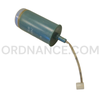
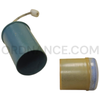
This LAW-marked practice cartridge brings together distinctive training-ammunition stencils, a white block, and a flexible tube. Its reported markings include M77, BLUE, and a partial lot code. These details make it a useful study piece for collections of infantry training ammunition and portable antitank equipment.
Identification and Features
The stencils supply the main identifying details. TP means target practice, and SUB indicates subcaliber. The supplied reading is retained below for comparison with period ammunition records.
- “38 MM TP SUB” — reported caliber and training designation
- “LAW” — Light Antitank Weapon marking
- “M77” — apparent model marking
- “BLUE” — reported stencil wording
- “LOT … EHD 78” — partial lot-style marking
- White block and flexible tube accompanying the cartridge
Function
The TP SUB wording points to a practice role using smaller ammunition in a dedicated LAW trainer. Subcaliber systems supported repeated instruction at a lower cost than full-size service rounds. They helped soldiers become familiar with the weapon and practice marksmanship.
Ignition-System Comparison
Army Field Manual FM 23-33, dated September 1, 1965, identifies a percussion primer, primer block, and flash tube among the M72's ignition components. That documented arrangement is the basis for comparing the white block and flexible tube described with this cartridge. These features are useful when studying differences among LAW training and service components.
Product History
Dedicated LAW practice ammunition was established by the 1970s. The Army's Training with LAW bulletin, dated June 30, 1976, described the economic value of subcaliber training. It listed the M73 practice rocket at $4.70 per round, less than one-tenth the price of a service round at that time.
Parent-Equipment History
The M72 LAW emerged in the early 1960s as a lightweight, single-use antitank weapon for an individual soldier. It combined a 66 mm rocket and a telescoping launcher in one self-contained unit. The launcher also served as the rocket's protective container before use. This compact approach made portable antiarmor equipment easier to distribute among infantry troops.
Weapon-System Background
The M72 grew from lessons learned with World War II weapons such as the American bazooka and German Panzerfaust. It combined rocket propulsion with a disposable launcher. In Cold War U.S. Army doctrine, LAW filled the light role alongside the larger Dragon and TOW guided-missile systems. This family gave infantry several types of antitank equipment, each with its own training needs.
History of Use
The M72 first saw combat during the Vietnam War and gained users beyond the United States. Licensed production began at Raufoss, Norway, in 1966. U.S. Army records from 1976 document M190 and M73 practice equipment in soldier and unit evaluations. This places LAW subcaliber ammunition within the training history that accompanied the service weapon's wider adoption.
Condition
This item is an inert ordnance collectible with the stencil lettering, white block, and flexible tube described above. Its markings are the main reference details for identification and display. Please check the pictures for the general condition of the item.
Ideal For
This cartridge suits collections that explain the training equipment used alongside portable infantry weapons. Displaying it with LAW manuals and documented practice rounds creates a useful comparison of markings and component designs.
- LAW training-ammunition collections
- Subcaliber cartridge reference displays
- Infantry weapons-training exhibits
- Military museums and educational collections
- Research into ammunition markings and model variations
Approx length 7", Approx width 2", Approx height 2", Approx weight 0.2lbs.
Please visit our page about order lead times here: Order Lead Times.