



Description
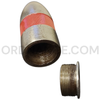
U.S. Navy 37mm Heavy One-Pounder Round with Early Hotchkiss Steel Shell
This inert U.S. Navy Heavy One-Pounder round is fitted with an early Hotchkiss, base-fuzed steel shell. It represents a naval ammunition family that bridged the era of manually loaded rapid-fire guns and early automatic cannon. Its historical connections make it a distinctive addition to a naval ordnance collection or maritime display.
Cartridge Identification
The cartridge is designated 37×136R and is also catalogued as 37×137R. Both names refer to the same U.S. Navy heavy one-pounder cartridge family. The letter R identifies the rimmed case, while the one-pounder name follows the period practice of identifying small artillery by nominal projectile weight.
Function of the Cartridge and Shell
In its original service configuration, this fixed ammunition combined the projectile, propelling charge, and primer into a single cartridge for quick handling. The case supported loading, helped seal the chamber during firing, and provided a rim for extraction. The steel shell used a fuze located in its base. This arrangement left the projectile's nose uninterrupted while placing the initiating mechanism at the rear.
Product History: Origins Around 1890
The heavy one-pounder cartridge family originated around 1890 for manually loaded Hotchkiss naval guns. It developed during a period when navies sought greater performance from compact artillery. The cartridge subsequently found applications in heavy automatic one-pounders, extending its service life into the twentieth century and World War I.
Projectile History: Early Hotchkiss Steel Shells
The fitted projectile belongs to an early Hotchkiss steel-shell design tradition. A. B. Dyer's 1896 Handbook for Light Artillery describes sharply pointed steel shells with base fuzes in its discussion of Hotchkiss revolving-cannon ammunition. That account documents the earlier projectile design lineage represented here, alongside the development of the heavy naval cartridge case.
Documented Applications: Heavy Naval One-Pounder Guns
Applications of this cartridge family included heavy Hotchkiss naval guns and the heavy Maxim-Nordenfelt automatic one-pounder. The Navy's Ordnance Pamphlet No. 127, revised in January 1918, identifies the latter weapon as the one-pounder Mark VI, formerly the Maxim-Nordenfelt heavy automatic Mark I. These connections place the cartridge family within both manually operated and automatic naval artillery systems.
Equipment History: Replacement of the Light One-Pounder
A contemporary Naval Ordnance article published in 1894 reported that the light one-pounder was to be withdrawn and that the heavy one-pounder had become the service gun of that caliber. The heavy type provided higher muzzle velocity while retaining the 37mm bore. This change reflects the Navy's effort to improve small-gun performance as it modernized its fleet and standardized its armament.
Weapon-System Background: The Naval Secondary Battery
One-pounder guns formed part of the smaller weapons carried alongside a warship's main battery. The 1894 account listed six one-pounders in the armament of the battleships Indiana, Massachusetts, and Oregon. Their inclusion illustrates the layered nature of naval armament during this period, when compact rapid-fire guns served alongside much larger weapons intended for heavily protected targets.
History of Use: Continued Service Through World War I
The cartridge family remained in use during World War I as heavy one-pounder weapons took on changing duties. The Navy's January 1918 ordnance pamphlet records heavy automatic Maxim-Nordenfelt Mark VI guns being remounted for antiaircraft service with specialized long day-tracer projectiles. This later ammunition configuration forms part of the broader system's history and shows how established small-caliber naval guns were adapted to new wartime needs.
Condition and Inert Status
All ordnance is inert. Please check the pictures for the general condition of the item.
Ideal For
This round offers a physical reference for studying the relationship between early Hotchkiss shell designs and the development of heavy naval one-pounder ammunition. It can complement period manuals, gun photographs, and exhibits tracing the growth of rapid-fire naval artillery.
- U.S. Navy and maritime history collections
- Hotchkiss and Maxim-Nordenfelt ordnance studies
- Early artillery ammunition collections
- Museum exhibits and educational displays
Approx length 8", Approx width 1.75", Approx height 1.75", Approx weight 1.2lbs.
Please visit our page about order lead times here: Order Lead Times.