






Description
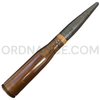
U.S. 37mm T324E22 Experimental Vigilante Round with T68B2 Steel Case
This 37mm T324E22 experimental Vigilante round features a 1957-dated Picatinny Arsenal projectile seated in a Frankford Arsenal T68B2 steel case. Offered inert for collection and display, it represents ammunition developed for the U.S. Army's six-barrel T250 Vigilante anti-aircraft gun.
Identification & Features
The round belongs to the 37×219mmSR ammunition family and carries separate projectile and cartridge-case markings.
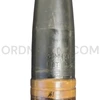
- 37MM T324E22: Projectile caliber and experimental designation.
- P.A.: Picatinny Arsenal marking on the projectile.
- E-25822: Projectile lot marking.
- 57: Projectile manufacture year, 1957.
- T68B2: Steel cartridge-case model.
- 37MM LOT FA-E-445-195: Case caliber and lot marking, with FA identifying Frankford Arsenal.
T324E22 Ammunition Development
The T324E22 design was undergoing Army evaluation in 1957. An October report from the Ballistic Research Laboratories at Aberdeen Proving Ground documented tests of its drag and flight stability. Ammunition development continued alongside changes to the gun: Springfield Armory's records from the second half of 1957 describe plans to shorten the cartridge case for the T250X-2, following the earlier T250X-1.
The T250 Vigilante and Its Mountings
Springfield Armory began developing the six-barrel T250 in 1956, drawing on experience with the 20mm T171 Vulcan program under Watervliet Arsenal's technical supervision. The Army approved the Vigilante system that October to improve defense against jet aircraft and replace the M42 Duster. Two versions paired the 37mm gun with radar ranging and optical tracking: the T248 towed Vigilante A and the T249 self-propelled Vigilante B. Vigilante followed the Raduster effort to improve the M42 and was intended as an interim weapon while the Army pursued the Mauler missile system.
Army Trials and Program Outcome
Following development trials, one pilot of each Vigilante version went to Fort Bliss, Texas, in February 1962 for service testing. The systems fell short of the Army's requirements for reliability, ruggedness, and stability. Funding limitations also slowed the work, and the program ended in July 1963 without entering regular service.
Condition
All ordnance is inert. Please check the pictures for the general condition of the item.
Ideal For
The marked projectile and steel case provide useful reference material for collections and exhibits focused on experimental American ammunition.
- T250 Vigilante and Cold War air-defense displays.
- Picatinny and Frankford Arsenal marking research.
- Comparative collections of experimental 37mm rounds.
Approx length 15.5", Approx width 2", Approx height 2.3", Approx weight 2.3lbs.
Please visit our page about order lead times here: Order Lead Times.