




Description
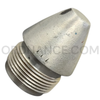
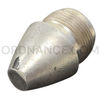
30mm WECOM Practice Projectile Nose Plug — Dummy Fuze
Product Overview
This 30mm practice projectile nose plug for WECOM projectiles is commonly called a “dummy fuze.” Offered as a separate ammunition component, it represents the practice side of an American experimental helicopter armament program. It provides a focused display piece for collectors interested in Cold War ammunition development and the smaller parts that completed a projectile.
Identification and Features
The item's identification describes its caliber, component role, and ammunition-family association. “Dummy fuze” is the common name for this nose component used with practice projectiles.
- Caliber: 30mm projectile application.
- Component: Practice projectile nose plug.
- Common name: Dummy fuze.
- Ammunition association: WECOM projectiles.
Function
The plug closes the nose opening and completes the outer profile of a practice projectile. It occupies the position associated with a nose fuze but does not perform a fuze's job of initiating an explosive charge. Its role is part of the projectile's physical form, making it useful for explaining the construction of practice ammunition in a collection or educational display.
Product History
WECOM refers to the U.S. Army Weapons Command, activated in 1962. The command managed research, design, development, procurement, and support for weapons, including aircraft gun armament. A 1973 U.S. General Accounting Office report records the Army's plan to combine WECOM and the Munitions Command into the Armament Command at Rock Island, Illinois. This organizational history explains the WECOM name attached to the ammunition program.
Documented End-Item Applications
The historical weapon association of the WECOM ammunition family is the experimental XM140 30mm automatic cannon. The Army's 1976 Aviation Planning Manual lists XM639E1 practice cartridges for that gun, alongside its combat ammunition. These records establish the broader practice-ammunition context for a WECOM nose plug; the cartridge designation applies to the complete round.
Equipment History
Development of the XM140 cannon and its XM552 ammunition began in 1963. The Army first considered the weapon system for the Cobra helicopter and later for the Cheyenne. The project paired development of a helicopter-mounted gun with ammunition intended for personnel and lightly armored targets. Practice cartridges supported the separate tasks of training and evaluating the weapon, giving components such as nose plugs a place within the wider ammunition effort.
Weapon System Background
The Lockheed AH-56 Cheyenne was an advanced Army attack helicopter intended to combine high speed with a dedicated gunship role. In 1966, Lockheed received a contract for ten prototypes. Its design used a rigid main rotor, wings, and a pusher propeller, bringing several aircraft technologies into one platform. The Cheyenne's development formed an important setting for the Army's experimental helicopter-cannon work during the Vietnam War period.
History of Use
The Army's 1976 manual records practice ammunition for training and weapon acceptance tests. It separately lists a solid aluminum dummy cartridge for cycling the XM52 weapon subsystem's feed system. These entries show that firing practice ammunition and checking a feed mechanism required different ammunition configurations. The nose plug offered here represents a projectile component within that broader training and test environment.
Program Outcome and Later Development
The XM140 weapon system did not enter operational service. A 1975 Army Audit Agency report explains that the gun was too heavy for the Cobra, while the Cheyenne program was terminated. Work on improved ammunition continued because it could serve other experimental helicopter cannon. The report identifies the XM188 and XM230 as candidates under the later Advanced Attack Helicopter program, showing how ammunition research continued beyond the original aircraft project.
Condition
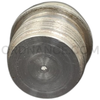
All ordnance is inert. Please check the pictures for the general condition of the item.
Ideal For
This nose plug suits a collection focused on ammunition components and experimental aircraft armament. Displayed beside documented WECOM ammunition or period technical references, it helps explain the distinct roles of a projectile body, nose plug, and functioning fuze.
- WECOM ammunition and component collections.
- Cold War helicopter armament exhibits.
- XM140 and Cheyenne development-history displays.
- Educational collections comparing practice components and fuzes.
Approx length 1", Approx width 1", Approx height 1", Approx weight 0.1lbs.
Please visit our page about order lead times here: Order Lead Times.