




Description
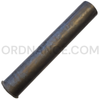
January 1904 U.S. Navy 3-Pounder Brass Cartridge Case, Cut Down to 13 Inches
Item Overview
This original U.S. Navy 3-pounder brass cartridge case dates from January 1904. The case has been cut down to approximately 13 inches tall, making it an unusual display piece from the early years of modern naval gunnery. This listing is for the empty cartridge case only; no projectile or propellant is included.
Headstamp Markings
The base is marked “1-1904,” “3-Pdr,” “W.McD.,” an inscription reported as “E.C.P.,” and a small anchor insignia. The date records January 1904, while “3-Pdr” identifies the ammunition class. The worn marking is “E.C.P.” the documented Washington Navy Yard marking used from July 1903 through April 1904 with an anchor and W.McD. The anchor represents U.S. Navy inspection or acceptance.
Inspector Initials
The E.C.P. and W.McD. initials are associated with Edwin Conway Pendleton and William Dugald MacDougall, U.S. Navy officers connected with ordnance inspection at the Washington Navy Yard. William MacDougall later became a rear admiral. Surface wear can make an “E” resemble an “F,” so the identification is based on the complete marking pattern and its January 1904 date.
Original Ammunition
The 3-pounder designation refers to the approximate weight of the original projectile, not the weight of the brass case. U.S. Navy 3-pounder ammunition was commonly made for 47mm, or approximately 1.85-inch, rapid-fire guns. Fixed ammunition joined the projectile, brass case, primer, and propellant into one unit, allowing sailors to load and fire faster than with separate components. The exact gun mark cannot be confirmed from the headstamp alone.
Weapons-System History
Hotchkiss and related 47mm 3-pounder rapid-fire guns entered naval service during the late 1800s. They were designed to protect large warships from fast torpedo boats that could approach before heavier guns could react. Their compact ammunition, quick breech operation, and high rate of fire made them useful as light secondary weapons on battleships, cruisers, gunboats, and patrol vessels.
History of Use
The U.S. Navy installed 3-pounder rapid-fire guns on many ships during the Spanish-American War era and the early 1900s. Battleships such as USS Maine and USS Missouri carried Hotchkiss 3-pounders as part of their light defensive batteries. As naval warfare changed, guns of this type also served for small-craft defense, patrol duty, training, and other secondary roles into the World War I period.
Cut-Down Configuration
This case has been shortened from its original service length to approximately 13 inches. Large brass cartridge cases were often altered after military service for display or decorative use, but the reason this example was cut down is unknown. The altered height, period headstamp, and naval anchor give it strong visual appeal for an early U.S. Navy ordnance display.
Condition
This is an original antique brass case that may show tarnish, oxidation, dents, scratches, residue, worn markings, and an uneven or finished cut edge. The altered case is offered as a collectible and display item. A projectile, propellant, weapon, and other ammunition components are not included unless specifically pictured or stated.
Ideal For
This historic case is well suited for U.S. Navy collections, early naval-ordnance displays, Spanish-American War and pre-World War I exhibits, Washington Navy Yard collections, antique cartridge-case displays, military museums, and educational collections.
Approx length 2.5", Approx width 2.5", Approx height 13", Approx weight lbs.
Pictures are stock images of our inventory. Unless otherwise noted, you will not be receiving the exact item shown in the pictures. The pictures are representative of the item’s general condition. The item you receive might be slightly better, or worse, condition than was shown in the pictures.
Please visit our page about order lead times here: Order Lead Times.