





Description
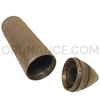
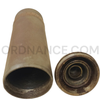
U.S. 3-Inch Common Shrapnel Projectile with Scovill Model 1907 M Combination Fuze
Product Overview
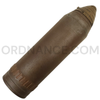
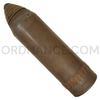
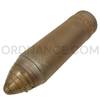
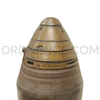
This inert U.S. 3-inch common shrapnel projectile is fitted with a Scovill Model 1907 M combination fuze. It represents the ammunition technology used by American field artillery in the early 1900s and World War I period. The projectile and its nose fuze form a useful display piece for collections focused on artillery, ammunition development, and American military manufacturing.
Identification and Features
“Common shrapnel” is the historical ammunition designation for this ball-filled projectile type. The Model 1907 M designation identifies the fitted fuze, while Scovill identifies its manufacturer. Together, these details connect the item with a documented American field-artillery ammunition system.
- Origin: United States.
- Caliber: 3 inches.
- Projectile type: Common shrapnel.
- Fitted fuze: Scovill Model 1907 M.
- Fuze type: Combination time and percussion.
Function
In live service, common shrapnel carried prepared balls intended to spread forward over a target area. A small charge in the base forced off the projectile’s head and expelled the balls. The body served mainly as their carrier and was designed to remain largely intact during this action. The resulting cone of balls made shrapnel especially useful against troops exposed in the open.
Documented End-Item Application
The War Department’s Handbook of the 3-Inch Gun Materiel, revised June 5, 1917, documents common shrapnel for the U.S. 3-inch field guns Models 1902, 1904, and 1905. It also describes the Model 1907 M combination fuze used with this ammunition. These guns equipped Regular Army and National Guard field-artillery units.
Product History
The 1917 handbook describes the service projectile as a steel body with a solid base, a rotating band, and a head fitted to receive the combination fuze. Its original filling included 252 balls, each about half an inch in diameter, held in a smoke-producing matrix. The filled and fuzed service projectile weighed approximately 15 pounds. These historical specifications describe the original ammunition design.
Equipment History
The Model 1907 M belonged to the Army’s 21-second combination-fuze family. Its time element used a burning powder train, while a separate percussion element provided impact action. The design formed part of a wider system that included dedicated fuze setters and range tables. Accurate timing was central to placing a shrapnel burst where its contents could have the intended effect.
Scovill Manufacturer History
Scovill Manufacturing Company developed from a business founded in Waterbury, Connecticut, in 1802. Its work expanded from buttons and metal goods into brass products, ammunition, and artillery fuzes. Army records document the company completing a contract for 5,000 3-inch field-gun shrapnel projectiles in December 1907. This established ordnance business provides historical context for the Scovill-made fuze fitted to this example.
Weapon-System Background
The American 3-inch field-gun system combined a breechloading gun, recoil equipment, a wheeled carriage, sights, and horse-drawn ammunition vehicles. Recoil control allowed the barrel to move backward and return after firing while limiting movement of the carriage. This reduced the work needed to reposition the gun between shots. The system was an important step toward faster and more effective field artillery.
History of Use
The United States entered World War I with 544 field guns of the older 3-inch Model 1902 type. Wartime production then shifted toward 75mm weapons to share ammunition standards with France. Shrapnel remained part of the broader artillery story, but trench warfare exposed its limits against protected troops. The difficulty of controlling burst height, especially in poor visibility, also helped drive the later move toward other projectile types. This item represents that period of change in American artillery.
Condition
All ordnance is inert. Please check the pictures for the general condition of the item.
Ideal For
This projectile suits collectors and educators studying early American field artillery, combination fuzes, and the industrial history behind military ammunition.
- U.S. Army artillery and ammunition collections.
- World War I period military displays.
- Scovill manufacturing and fuze collections.
- Museum exhibits explaining historical shrapnel ammunition.
Approx length 11", Approx width 3", Approx height 3", Approx weight 7.7lbs.
Pictures are stock images of our inventory. Unless otherwise noted, you will not be receiving the exact item shown in the pictures. The pictures are representative of the item’s general condition. The item you receive might be slightly better, or worse, condition than was shown in the pictures.
Please visit our page about order lead times here: Order Lead Times.