





Description
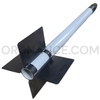
U.S. Navy WWII 3.5-Inch Aircraft Rocket with Mk 8 Solid-Steel Armor-Piercing Head
Item Overview
This inert U.S. Navy 3.5-inch Forward-Firing Aircraft Rocket represents an important WWII development in airborne anti-submarine and anti-armor weapons. Commonly shortened to FFAR, the design allowed aircraft to attack submarines at a distance and also served against surface targets. Its solid steel head relied on impact rather than an explosive burst. The rocket family's success helped lead to larger aircraft rockets for shipping and land targets.
Identification and Features
In this identification, “Mk 8” refers to the solid head. The head and motor had separate Mark designations, and Navy references document the Mk 8 head with the 3.25-inch Mk 7 motor. This distinction helps collectors identify the individual components without confusing the head number with the designation of the entire rocket.
- Rocket type: U.S. Navy 3.5-inch Forward-Firing Aircraft Rocket.
- Mk 8 head: Solid steel penetrating head with no explosive filling or fuze.
- Head weight: The historical Navy specification lists 20 pounds for the head alone.
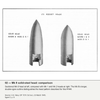
- Head shape: The Mk 8 used a double-ogive profile, formed from two joined curves, to improve underwater travel.
- Motor family: Documented with the narrower 3.25-inch Mk 7 rocket motor.
- Stabilization: Four fixed tail fins helped keep the unguided rocket stable in flight.
Function
The rocket's motor accelerated the round, while its heavy steel head carried the energy needed to penetrate a target. Against submarines, the intended effect was to puncture the pressure hull through the head's mass and speed. The head contained neither an explosive charge nor a fuze, so its effect depended on penetration and damage along its path. This placed the weapon within the history of aircraft-launched armor-piercing ammunition while giving it a specialized naval role.
Documented End-Item Application
The 3.5-inch aircraft rocket was developed chiefly for anti-submarine warfare, with surface shipping and armored targets also included in its intended applications. U.S. Navy OP 1664 describes the family as intended for smaller targets such as submarines and tanks. The original aircraft association was the Grumman TBF Avenger. These documented roles explain the item's anti-tank and anti-submarine identification without assigning a particular combat mission to this example.
Product History
Royal Air Force trials of air-launched anti-submarine rockets during 1942 helped demonstrate the weapon's promise. American work accelerated during spring and summer 1943, when the U.S. Navy and California Institute of Technology pursued a high-priority forward-firing rocket program. The motor was under development at Caltech that year. Published histories report an August 1943 production order calling for 10,000 rockets per month, followed by operational introduction late in 1943. The design moved from testing toward fleet service within the same year.
Underwater Design and Historical Performance
Early solid-head designs used relatively blunt, roughly conical nose profiles to control the rocket's path after entering water. Their upward-turning tendency could produce a shallow underwater run suited to surfaced submarines and boats near periscope or snorkel depth. The Mk 8 refined this approach with a double-ogive nose that reduced nose lift and improved underwater travel. Historical summaries describe shallow-dive attacks and note that steep water entry could prevent the intended shallow run. They commonly quote about 130 feet of useful underwater travel, a water-entry point roughly 60 feet ahead of the submarine, and a typical firing range near 1,500 yards. The underwater run extended the possible hit area beyond the exposed hull. These are reported historical figures; actual performance depended on the head design and test conditions.
Parent-Equipment History
The Grumman TBF Avenger was a carrier-based torpedo bomber that entered Navy service in 1942. Its duties expanded beyond torpedo attacks to bombing, patrol, and submarine hunting. General Motors' Eastern Aircraft Division also built the design under the TBM designation. Rocket armament gave Avenger crews another weapon for these varied missions. Carrier operations brought the aircraft and its rockets into the campaign to protect ocean shipping and challenge enemy submarines.
Weapon-System Background
The FFAR was an unguided aircraft weapon stabilized by fins, with different heads offering different effects. Its accuracy supported attacks on surface targets, including armor, but the narrow 3.5-inch head limited the explosive filling available in alternative designs. A larger head, adapted from a 5-inch naval artillery projectile, produced the related 5-inch FFAR. Often described as a roughly 45-pound, re-fuzed Mk 35 shell, this development gave the rocket family greater explosive effect against ships and land installations. Navy ammunition tables list the resulting Mk 1 rocket head at about 46.5 pounds with its specified fuze, illustrating why published weights vary.
Launcher Development
Early installations used long channel-slide rails beneath the wings, commonly described as approximately 92 inches long. Their drag reduced aircraft performance and encouraged a simpler mounting system. Zero-length launchers supported each rocket on short posts, greatly reducing the launcher's exposed length and drag. Although May 1945 is repeated in some later summaries, the official 1946 government history places service introduction in spring 1944. Post-type launchers became widely used on fighters and light bombers and supported rocket families with both 3.25-inch and 5-inch motors.
History of Use
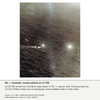
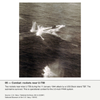
The 3.5-inch FFAR became part of the Navy's wartime anti-submarine campaign and was also used against other shipping. On January 11, 1944, TBF Avengers from USS Block Island attacked German submarine U-758 with rockets and other weapons. An early postwar account credited this action as the first submarine sinking involving American forward-fired aircraft rockets. The Navy's later ship history records that U-758 survived with serious damage and was forced back to base. The attack remains an important early combat milestone, while the rocket's broader success helped establish aircraft rockets as useful weapons against both maritime and land targets.
Condition
Please check the pictures for the general condition of the item.
Ideal For
This rocket suits collections exploring WWII naval aviation, airborne anti-submarine warfare, and the development of aircraft weapons. Its solid-head design helps explain how speed, mass, and nose shape could provide a penetrating effect without an explosive warhead. It also supports displays connecting wartime research, fleet aircraft, and the growth of rocket armament.
- WWII U.S. Navy aircraft ordnance collections.
- TBF and TBM Avenger historical exhibits.
- Anti-submarine and airborne anti-armor displays.
- Battle of the Atlantic and naval aviation collections.
- Museums studying early American rocket development.
Approx length 64", Approx width 12", Approx height 12", Approx weight 44 lbs.
Please visit our page about order lead times here: Order Lead Times.