




Description
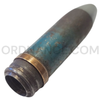
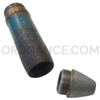
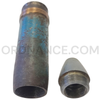
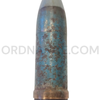
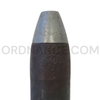
20mm Mark 4 HE-T Projectile for the 20x110mm Oerlikon Cannon
Item Overview
This 20mm Mark 4 projectile represents the high-explosive tracer ammunition developed for U.S. Navy 20x110mm Oerlikon antiaircraft guns. The projectile was one part of a complete fixed cartridge and was seated in a large brass cartridge case. Its compact design combined an explosive projectile body, a nose fuze, and a tracer element in the base. This listing is for one projectile component only and does not include a cartridge case, primer, propellant, loading clip, magazine, or weapon unless specifically stated.
Identification and Features
U.S. Navy manuals identify this projectile family as the 20mm antiaircraft H.E.-T. Mark 4, with Mods 1 through 28 used to separate production from different contracts. The Mark and Mod number, manufacturer’s symbol, and lot number were normally stamped into the projectile body. Markings, paint, fuze type, and minor construction details can help identify an individual example, but worn or restored finishes should not be used as the only proof of its original loading.
- Designation: 20mm H.E.-T. Projectile Mark 4
- Modification range: Mark 4 Mods 1 through 28
- Original service type: High-explosive tracer
- Cartridge family: 20x110mm RB Oerlikon
- Original nose fuze: Mark 26 Mod 0 or Mark 26 Mod 2
- Original tracer location: Pocket in the projectile base
- Documented service length: Approximately 3.025 inches with the service assembly
- Documented loaded weight: Approximately 0.2621 pound
- Offered component: One 20mm projectile only
- Current inert status: Not confirmed by the information provided
Original Service Configuration
The live Mark 4 was an H.E.-T., or high-explosive tracer, projectile. Its explosive cavity held tetryl or pentolite, while the tracer pocket contained a separate pyrotechnic composition. The Mark 26 nose fuze was designed to function when the projectile struck a target. Standard tracer compositions produced a visible path after firing, while some later rounds used a dark-ignition tracer that delayed its brightest light to reduce glare near the gun. The similar Mark 7 projectile had a smaller tracer cavity and should not be confused with the Mark 4.
Original Service Function
The Mark 4 projectile was designed for short-range defense against aircraft. The tracer helped a gun crew follow the stream of fire and adjust its aim toward a moving target. If a live projectile struck an aircraft or other object, the nose fuze initiated the explosive filling. The combination of impact, explosive force, and projectile fragments was intended to damage aircraft structures, engines, control surfaces, and other light targets. Its rotating band engaged the rifling inside the barrel and gave the projectile the spin needed for stable flight.
Markings and Wartime Colors
Period U.S. Navy identification instructions listed light gray for Mark 4 projectiles loaded with tetryl and blue for those loaded with pentolite. A bright red band could identify a projectile fitted with a dark-ignition tracer. Surviving examples may have lost part or all of their original paint through handling, corrosion, cleaning, or restoration. Any visible Mark, Mod, manufacturer, lot, or inspection stamps should be preserved because they may document where and when the projectile was produced.
Cartridge and Weapon Application
The Mark 4 projectile belonged to the 20x110mm RB Oerlikon cartridge family. The letters RB describe the rebated rim of the cartridge case, which had an extractor rim smaller than the main case body. This feature helped distinguish Oerlikon ammunition from the separate 20x110mm Hispano cartridge family. Complete Mark 4 ammunition was used with U.S. Navy 20mm Oerlikon gun mechanisms, including Marks 2 and 4 and their related barrels, mounts, magazines, and sights. Oerlikon and Hispano ammunition may look similar, but the two cartridge systems were not interchangeable.
History of the 20mm Oerlikon Gun
The Oerlikon cannon was developed in Switzerland from an earlier automatic-cannon design and became one of the best-known light antiaircraft weapons of World War II. The U.S. Navy described the Mark 1 as the original Swiss gun and the Mark 2 as an improved version made in Britain and the United States. The American Mark 4 was nearly identical to the Mark 2 but used different manufacturing limits. Its simple mechanism, drum magazine, and relatively light pedestal mount allowed the gun to be installed wherever a ship had enough deck space and a clear field of fire.
History of Use
During World War II, 20mm Oerlikon guns were fitted to aircraft carriers, battleships, cruisers, destroyers, escort ships, patrol craft, landing vessels, armed merchant ships, and many auxiliary vessels. They protected ships from low-flying bombers, torpedo aircraft, and strafing attacks in the Atlantic, Mediterranean, and Pacific. Oerlikon crews also fought during convoy operations, amphibious landings, and major carrier battles. The weapon became especially important in close-range defense, although larger 40mm guns took on more of the work against heavily built aircraft and late-war kamikaze attacks.
Historical Significance
The Mark 4 projectile represents the ammunition that supplied one of the most widely installed Allied naval antiaircraft guns of World War II. It shows how a small cannon projectile could combine an impact fuze, explosive charge, rotating band, and tracer in one compact assembly. Surviving examples are useful for displaying the development of naval air defense, wartime ammunition production, and the dangerous conditions faced by open gun crews aboard combat ships.
Condition and Safety Status
This is a surplus projectile component that may show scratches, oxidation, pitting, paint loss, discoloration, dents, tool marks, or other signs of age and storage. The supplied information does not confirm that the explosive cavity, nose fuze, and tracer pocket are empty. This draft therefore does not certify the offered item as inert. A Mark 4 projectile must be professionally inspected and verified before it is advertised or handled as inert. Age, missing paint, a missing cartridge case, or an empty-looking opening does not prove that every energetic component has been removed.
Ideal For
Once its inert condition has been properly verified, this Mark 4 projectile can form an important part of a display covering U.S. Navy antiaircraft ammunition and the development of close-range ship defense during World War II.
- 20mm Oerlikon ammunition collections
- World War II naval displays
- U.S. Navy ordnance exhibits
- Automatic-cannon ammunition studies
- Military museums and educational collections
- Restoration and identification projects
Approx length 3.025", Approx width .79", Approx height .79", Approx weight .26 lbs.
Pictures are stock images of our inventory. Unless otherwise noted, you will not be receiving the exact item shown in the pictures. The pictures are representative of the item’s general condition. The item you receive might be slightly better, or worse, condition than was shown in the pictures.
Please visit our page about order lead times here: Order Lead Times.