







Description
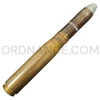
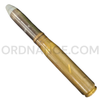
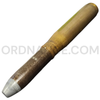
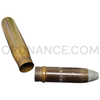
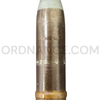
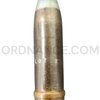
WWII U.S. Navy 20mm Oerlikon Round with Mk 3-25J Projectile
Product Overview
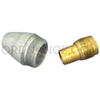
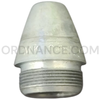
This WWII-era U.S. 20×110mm RB Oerlikon antiaircraft cannon round is assembled with a Mk 3-25J projectile and a Mk 26 Mod 1 nose fuze. Its 1945-dated WB cartridge case identifies West Bend Aluminum Company as the case manufacturer.
Identification and Features
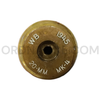
The case, projectile, and fuze each carry their own model designation. Their markings identify the individual components and record the case year and projectile production lot.
- 20-MM MK-4: Identifies the 20mm Mk 4 cartridge case.
- 1945: Case manufacturing year.
- WB: West Bend Aluminum Company, West Bend, Wisconsin, the cartridge-case manufacturer.
- MK 3-25J LOT 2: Mark 3 projectile bearing the 25J modification marking and production lot number 2.
- MK 26-1: Mk 26 Mod 1 point-detonating nose fuze.
- 20×110mm RB: Cartridge format; RB means rebated rim, with the extractor rim narrower than the main case body.
Function
The Oerlikon provided close-range defense against attacking aircraft. Explosive service versions of the Mark 3 projectile produced blast and fragments, while high-explosive incendiary versions added a fire-starting effect. A point-detonating nose fuze supplied the impact function for explosive ammunition. Navy references list the Mk 26 Mod 1 among the nose fuzes used with Mark 3 projectiles, documenting the connection between the component types fitted here.
Product History
The Mark 3 family formed part of the Navy’s wartime 20mm ammunition supply. The 1947 manual U.S. Explosive Ordnance, OP 1664, records Mark 3 modifications from Mod 1 through Mod 64 and includes high-explosive, high-explosive incendiary, and blind-loaded practice forms. It explains that the many modification numbers distinguished products from different contracts. This system makes the model and lot stamps useful records of ammunition production.
Cartridge-Case Manufacturer History
West Bend Aluminum Company began in Wisconsin in 1911 as a maker of cookware and household goods. In 1941, it secured a major Navy contract for 20mm antiaircraft cartridge cases. The company’s history describes women joining the factory workforce and production reaching more than six million cases per month. It also records six Navy “E” awards for production excellence. The WB headstamp connects this case with that documented conversion of civilian industry to military supply.
Documented End-Item Applications
The Navy’s March 1943 20mm Antiaircraft Gun manual, OP 911, states that ammunition was common to British Mark 1 and Mark 2 Oerlikon guns and U.S. Navy Mark 2 and Mark 4 guns. These records place the cartridge format within a defined family of naval automatic cannons. The shared ammunition served different Oerlikon installations used for local air defense aboard ships.
Equipment History
A standard Oerlikon installation combined an air-cooled cannon with a drum magazine, sight, shoulder rest, and hand grips. The gun commonly used a 60-round magazine and a pedestal mount that allowed the crew to follow approaching aircraft. Wartime improvements included the Mark 14 gyroscopic computing sight, which helped account for target movement. These changes supported the gun’s role in defending ships against fast-moving threats at close range.
Weapon-System Background
The U.S. Navy tested early Oerlikon guns in 1935 but did not adopt those versions. By 1940, the threat from dive bombers had increased the need for a more powerful close-range weapon. British naval experience helped draw attention to the improved Swiss Oerlikon design, and the Navy approved its adoption in November 1940. American production and shipboard installation followed during 1941, building the supply and support system that expanded throughout World War II.
History of Use
Oerlikon guns served within layered naval defenses alongside fighter aircraft and larger antiaircraft weapons. During the Battle of the Philippine Sea in June 1944, massed shipboard fire helped stop attackers that passed the fleet’s fighter defenses. At Okinawa in 1945, 20mm and 40mm batteries carried much of the burden of close-range defense against kamikaze attacks. This operational history explains the demand for Oerlikon ammunition during the period represented by the dated case.
Condition
All ordnance is inert. Please check the pictures for the general condition of the item.
Ideal For
This round suits a collection focused on naval ammunition, wartime manufacturing, or shipboard antiaircraft defense. Its West Bend headstamp and Lot 2 projectile provide useful production details for comparison with period manuals and other Oerlikon ammunition examples.
- World War II U.S. Navy ordnance collections.
- Oerlikon 20mm gun and ammunition displays.
- West Bend manufacturing-history exhibits.
- Reference collections studying military component markings.
Approx length 7", Approx width 1", Approx height 1", Approx weight 0.6lbs.
Please visit our page about order lead times here: Order Lead Times.