




Description
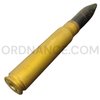
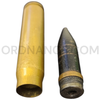
WWII U.S. 20mm Hispano M95 AP-T Round with 1943 Brass Case
Product Overview
This U.S. 20×110mm Hispano-Suiza aircraft-cannon round combines an M95 armor-piercing tracer projectile with a 1943-dated M21A1 brass cartridge case. The case carries the G.M.S. marking of Globe Machine & Stamping Co. of Cleveland, Ohio. Its separate case-head and projectile inscriptions provide useful details for collectors studying American aircraft ammunition from World War II.
Identification and Features
The headstamp reads “G.M.S. 1943 — 20MM M21A1,” while the projectile’s driving band is stamped “YSL-8-44 -20MM-M95.” These markings identify the two main components separately. The 1943 date belongs to the cartridge case.
- G.M.S.: Globe Machine & Stamping Co., Cleveland, Ohio, the cartridge-case manufacturer.
- 1943: Year marked on the cartridge case.
- 20MM: Nominal ammunition caliber.
- M21A1: Brass cartridge-case designation.
- 20MM-M95: Identifies the projectile as the 20mm M95 armor-piercing tracer type.
- YSL-8-44: Manufacture's projectile production marking code.
Function
In standard service form, the M95 used a solid steel armor-piercing body to damage armored targets through impact and penetration. A streamlined steel windshield covered its forward section and improved its flight shape. Red tracer composition in the base produced a visible trail, allowing crews to observe the path of their fire. The AP-T designation describes these combined armor-piercing and tracer functions.
Product History
The M95 formed part of a wartime program of specialized 20mm aircraft ammunition. The Army’s January 1945 publication index lists an Ordnance circular dated 8 August 1944 covering the experimental T9E5 designation alongside M95. The same entry includes the M96, M97, and M99 ammunition types, placing the M95 within a wider development program. Postwar Army ammunition references continued to document its construction and intended guns.
Cartridge-Case History
The Ordnance School’s November 1942 ammunition text identifies the M21A1 as the standard brass case for American 20mm aircraft-cannon ammunition. It describes a formed shoulder and an extractor groove near the base, features that supported feeding and removal in automatic guns. Period markings recorded the caliber, case designation, manufacturer, and year. This organized marking system allows surviving cases to retain their identity even when separated from their original packaging.
Documented End-Item Applications
The Army’s TM 43-0001-27, Army Ammunition Data Sheets, lists M95 ammunition for the M3 and M24A1 20mm aircraft cannons. These applications cover the ammunition design and its gun-specific cartridge versions. The M3 used percussion ignition, while the M24 and M24A1 employed electrically primed ammunition. This distinction reflects the changes made to the broader Hispano ammunition family as aircraft weapons developed.
Equipment History
Postwar installations in this cannon family included the defensive armament of the B-36 Peacemaker bomber. The National Museum of the U.S. Air Force displays a remote turret containing two M24 20mm cannons. Separate gunners controlled these turrets from sighting stations, and several turrets could retract into the fuselage to reduce drag. The later Featherweight program removed most of the B-36’s guns to save weight, retaining the tail turret for rear defense.
Weapon-System Background
The Hispano-Suiza 20mm aircraft-cannon family grew from designs developed during the 1930s. Both the United States and United Kingdom manufactured Hispano-derived guns and ammunition during World War II. American wartime manuals describe the M1 and AN-M2 aircraft guns, while later references cover the M3 and M24 families. The 20×110mm cartridge became part of this continuing effort to provide aircraft with cannon armament suited to attacking aircraft and other military targets.
History of Use
The broader cannon family continued into the early jet age. The National Naval Aviation Museum lists the F9F-2 Panther with four forward-firing 20mm Mk-3 cannons. Panthers first entered combat on 3 July 1950, flying strikes from USS Valley Forge during the Korean War. Navy and Marine squadrons used the aircraft extensively, mainly in strike roles. This service history shows how Hispano-derived aircraft armament connected wartime ammunition development with the combat aircraft of the early Cold War.
Condition
All ordnance is inert. Please check the pictures for the general condition of the item.
Ideal For
This round offers several points of interest for an aviation ordnance collection: a wartime Cleveland-made brass case, a marked M95 AP-T projectile, and separate production inscriptions. It also provides a useful reference piece for comparing surviving ammunition with period drawings and Army technical descriptions.
- U.S. 20mm Hispano ammunition collections.
- World War II aircraft-armament displays.
- M95 armor-piercing tracer projectile studies.
- American wartime manufacturing exhibits.
Approx length 7", Approx width 1", Approx height 1", Approx weight 0.6lbs.
Please visit our page about order lead times here: Order Lead Times.