



Description
U.S. Military 20mm M39/M39A1 Automatic Aircraft Cannon Anvil Assembly, P/N 8413038 – Pontiac GM, 1955
This original U.S. military Anvil Assembly, part/drawing number 8413038, was manufactured as a component for the 20mm M39 and M39A1 automatic aircraft cannons.
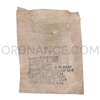
The original Pontiac Motor Division packaging is marked “2—ANVIL ASSY,” “P-8413038,” and “20 MM M-39 & M-39A1,” while the component itself is stamped 8413038. The package was preserved using VCI corrosion-protection material and is dated November 1955.
The “2” on the package identifies the original packing quantity of two assemblies. It is not part of the part number.
Historical Significance
The M39 was one of the first successful American high-rate 20mm revolver aircraft cannons. Developed after World War II from the experimental T-160 program, its design was influenced by the German Mauser MG 213 revolver-cannon concept.
The T-160 was combat-tested in modified F-86 Sabres during the Korean War. This work helped prove that a fast-firing 20mm cannon could give American jet fighters much greater striking power than the .50-caliber machine guns that had dominated U.S. fighter armament during World War II.
The production M39 and its improved variants became important U.S. Air Force aircraft weapons during the 1950s and Cold War. M39-family cannons were used on aircraft including the F-86H Sabre, F-100 Super Sabre, F-101 Voodoo, B-57 Canberra, and later F-5 Freedom Fighter/Tiger II family.
This assembly's November 1955 packing date places it near the beginning of the M39's large-scale service life, when the M39 and M39A1 were still the principal early configurations.
What This Item Is
Part number 8413038 is identified by its original military packaging as an ANVIL ASSY for the M39 and M39A1 20mm guns.
The term “anvil” can cause confusion because ammunition primers also contain a very small component called an anvil. This is not an ammunition-primer anvil. It is a much larger mechanical gun component identified as an assembly within the M39/M39A1 weapon system.
The exact mechanical location and detailed function of P/N 8413038 are not shown clearly enough in the accessible period reference material to assign it a more specific role without speculation. For that reason, this listing retains the original military nomenclature rather than attempting to describe an unsupported function.
M39 Revolver-Cannon Design
Unlike a conventional single-chamber automatic cannon, the M39 uses a revolving multi-chamber mechanism.
This design allowed several stages of the firing cycle to occur around the rotating chamber assembly rather than forcing every operation to happen in one fixed chamber. The result was a high rate of fire from a single barrel.
The M39 family fires the 20x102mm cartridge, a compact aircraft-cannon round that later became one of the major American 20mm ammunition families.
The M39's combination of high velocity, high rate of fire, and compact aircraft installation made it an important bridge between the machine-gun armament of World War II and later high-rate cannon systems such as the M61 Vulcan.
Pontiac Motor Division Production
The surviving package identifies Pontiac Motor Division of General Motors and dates the preservation packing to November 1955.
General Motors was heavily involved in U.S. military production during the Cold War, and Pontiac became associated with production of M39-series cannon equipment.
The original manufacturer packaging gives this example additional historical value because it ties the component directly to the industrial production system supporting early U.S. jet-fighter armament.
Key Features
-
Official package nomenclature: Anvil Assy
-
Part/drawing number: 8413038
-
Package marking: P-8413038
-
Component stamping: 8413038
-
Weapon application: 20mm M39 Automatic Gun
-
Weapon application: 20mm M39A1 Automatic Gun
-
Manufacturer/package source: Pontiac Motor Division, General Motors
-
Location: Pontiac, Michigan
-
VCI preservation packed
-
Package date: November 1955
-
Original crate quantity: 2 assemblies
-
Period: Early Cold War
-
Weapon type: Aircraft-mounted 20mm revolver cannon
-
Ammunition family of parent weapon: 20x102mm
-
Historical reference: T.O. 11W1-12-3-14
-
Reference title: Illustrated Parts Breakdown for Automatic Gun 20MM M39 and M39A1
-
Reference date: January 30, 1957
Why This Item Matters
Small internal cannon components are often difficult to identify once separated from their original packaging.
This example is different because several independent details agree: the 8413038 stamping on the component, the P-8413038 package marking, the ANVIL ASSY nomenclature, and the direct M39 & M39A1 weapon identification.
The original November 1955 Pontiac packaging also places the part in the early production period of one of America's most important first-generation jet aircraft cannons.
For a collector, museum, or restoration display, it represents the mechanical side of early Cold War aircraft armament rather than the more commonly encountered ammunition or complete gun.
About This Item
This listing is for an original 20mm M39/M39A1 Anvil Assembly, P/N 8413038.
The component may show original preservative, grease, discoloration, oxidation, machining marks, scratches, or other signs of age and long-term military storage.
The original crate marking “2—ANVIL ASSY” indicates that the package originally contained two assemblies.
The complete M39/M39A1 cannon, ammunition, feeder components, aircraft installation hardware, and other gun parts are not included unless specifically shown or stated.
Ideal For
-
M39 automatic cannon collections
-
M39A1 cannon restorations
-
Early U.S. jet-fighter displays
-
Korean War and Cold War aviation collections
-
F-86H Sabre displays
-
F-100 Super Sabre collections
-
F-101 Voodoo displays
-
B-57 Canberra collections
-
Aircraft armament museums
-
Pontiac / General Motors military-production collections
-
20mm cannon technical-reference collections
Approx length 1", Approx width 1", Approx height 1", Approx weight .1lbs.
Pictures are stock images of our inventory. Unless otherwise noted, you will not be receiving the exact item shown in the pictures. The pictures are representative of the item's general condition. The item you receive might be slightly better, or worse, condition than was shown in the pictures.
Please visit our page about order lead times here: Order Lead Times