




Description
U.S. 20mm AN-M2 and M3 Aircraft Cannon Rear Sear-Buffer Block A25551
Item Overview
This original U.S. military Block, Sear Buffer, Rear was made for the sear-block group used in the 20mm AN-M2 and M3 aircraft automatic cannons. It is identified by drawing and part number A25551 and historical Army stock number 1-B-2032-190. This small steel component formed part of the mechanism that cushioned the sear as it stopped the returning breechblock. Its documented use with both cannon models connects it to American aircraft armament from World War II through the early jet era.
Identification and Features
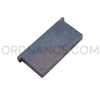
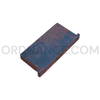
The official nomenclature is Block, Sear Buffer, Rear. The 1944 aviation-ordnance catalog lists A25551 within the AN-M2 spare-parts system, while the 1948 ORD 9 SNL A-47 parts catalog covers the AN-M2 and M3 guns. This example is stamped “A25551 EE” and retains a parkerized military finish. Its rectangular body and formed end lips agree with the rear block illustrated in the AN-M2 sear-block group. The block was installed with the sear, sear block, buffer springs, plungers, and front sear-buffer block.
- Official nomenclature: Block, Sear Buffer, Rear
- Drawing and part number: A25551
- Historical Army stock number: 1-B-2032-190
- Visible marking: A25551 EE
- Applications: 20mm AN-M2 and M3 aircraft cannons
- Parent assembly: Sear-block group
- Material: Steel
- Finish: Parkerized
Function and Operation
The sear-block group controlled when the cannon’s breechblock was released and when it was held in the retracted position. The sear engaged a recess in the bottom of the breechblock lock. When the firing control operated the sear, the breechblock was released to move forward, chamber a cartridge, and begin the firing cycle. TM 9-227 states that the sear block housed the sear-buffer springs and plungers. The steel buffer block was installed next to the plungers, with the fiber block placed against the steel block. These parts formed the buffer arrangement that absorbed shock when the sear and breechblock engaged. A25551 was the rear block in this group. It was not the cannon’s main rear buffer, which was a separate assembly used to cushion breechblock recoil.
End-Item Application
Part A25551 is documented for the 20mm Aircraft Automatic Gun AN-M2 and the later 20mm Automatic Gun M3. The AN-M2 could be mounted as a fixed gun in an aircraft wing or fuselage, behind an engine to fire through the propeller hub, or in a suitable flexible mount. The gun could not be synchronized to fire through rotating propeller blades. The M3 continued the same aircraft-cannon family and retained A25551 in its parts system. Documented aircraft applications for this cannon family included the F4U-1C Corsair during World War II and the F9F Panther during the Korean War.
Historical Background
The AN-M2 was an American aircraft cannon developed from the Hispano-Suiza 20mm design. It used combined gas and blowback operation, was air-cooled, and had a listed firing rate of approximately 600 to 700 rounds per minute. The weapon was adapted to several Army and Navy aircraft installations during World War II. Wartime experience led to continued development of the gun family, including the M3 model. The U.S. Army’s official ordnance history records that more than 26,000 20mm aircraft guns were converted to M3 models during the final 15 months of the war. The January 1948 parts catalog continued to list A25551 for the AN-M2 and M3, showing that this internal component remained part of the military supply system as the improved cannon entered wider postwar service.
History of Use
The AN-M2 served in American fighter and attack aircraft during World War II. One documented application was the F4U-1C Corsair, which carried four 20mm cannons in place of the machine-gun armament fitted to other Corsair variants. Marine Fighter Squadron VMF-311 operated cannon-armed Corsairs during the Okinawa campaign, using them against enemy aircraft and ground targets. The M3 later armed early jet aircraft including the Grumman F9F Panther, which carried four forward-firing 20mm cannons. Navy and Marine Panthers flew fighter, escort, and ground-attack missions during the Korean War. The use of A25551 in both cannon models connects this small internal part to the transition from World War II piston-engine combat aircraft to the first generation of American carrier-based jet fighters.
Condition
This is an original military-surplus rear sear-buffer block with its parkerized finish and A25551 EE identification stamping present. The surfaces show light age, storage, and handling wear consistent with an older military component. Its formed end lips remain part of the original configuration. This listing includes the rear sear-buffer block only; the sear, sear block, springs, plungers, front block, bottom plate, and other cannon components shown in the reference diagrams are not included.
Ideal For
This original marked component offers a compact and clearly identified example of the internal firing-control parts used in an important American aircraft-cannon family. Its documented part number and shared use in the AN-M2 and M3 make it well suited for ordnance collections, aircraft-armament displays, museum interpretation, automatic-cannon study, and historical restoration reference.
- U.S. aircraft-armament collections
- AN-M2 or M3 cannon displays
- World War II aviation exhibits
- Korean War aviation exhibits
- Automatic-cannon technical study
- Historical restoration reference
Approx length 1.5", Approx width 0.75", Approx height 0.25", Approx weight 0.01 lbs.
Pictures are stock images of our inventory. Unless otherwise noted, you will not be receiving the exact item shown in the pictures. The pictures are representative of the item’s general condition. The item you receive might be slightly better, or worse, condition than was shown in the pictures.
Please visit our page about order lead times here: Order Lead Times.