




Description
Japanese 20mm Ho-5 Aircraft Cannon Round
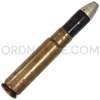
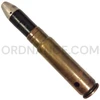
This inert Japanese 20x94mm Ho-5 round brings together a brass bottleneck case, black-painted projectile, and removable light-alloy nose fuze. Associated with the Imperial Japanese Army’s aircraft armament of World War II, it offers collectors a display example of the ammunition used by the Nakajima Ki-84 Hayate fighter.
Case and Projectile
The Ho-5 cartridge used a solid-drawn, rimless brass case with a short neck and rounded shoulder. This round has a primer seated in the base and a copper-colored driving band around the projectile near the case mouth. The projectile resembles the Type 2 high-explosive incendiary (HEI) design, which combined explosive and incendiary effects for use against aircraft.
Type 2 Nose Fuze and Markings
The fitted nose fuze is a Type 2 small instantaneous fuze, a light-metal-alloy development of the brass Type 100 small instantaneous fuze. Its original role was to initiate the projectile on impact. The flush, staked side plug is a documented variation of the Type 2 design. Japanese characters and a separate “22” stamp remain visible on its exterior, along with a yellow-colored disc at the tip. Within the Ho-5 ammunition family, the Type 2 Modified HEI projectile used a different Type 4 fuze that housed its booster within the fuze body, leaving more space for the projectile’s explosive filling.
Development of the Ho-5 Cannon
The Ho-5 grew out of the Japanese Army’s Browning-derived 12.7mm Ho-103 aircraft machine gun. Enlarging this family to 20mm gave Army aircraft heavier cannon armament while retaining a familiar recoil-operated system. The Ho-5 was air cooled and fed from a disintegrating metallic-link belt, with electrical remote firing in fixed installations. It became a principal Army aircraft cannon during the later years of the war. The 1945 U.S. Ordnance catalog listed a cyclic rate of 950 rounds per minute and a muzzle velocity of 2,430 feet per second, approximately 741 meters per second, for its historical high-explosive ammunition.
Ki-84 Fighter and Ki-67 Bomber Applications
The Nakajima Ki-84 Hayate, known to the Allies as “Frank,” carried a Ho-5 cannon in each wing in its standard mixed-armament configuration, together with two 12.7mm machine guns above the engine. The Ki-84 combined this armament with pilot armor and self-sealing tanks, marking the Army’s move toward better-protected fighters with greater firepower. It saw service in China and the Philippines during the closing stages of the war. The Ho-5 also armed the Mitsubishi Ki-67 Hiryu bomber, Allied reporting name “Peggy,” extending this ammunition family’s role beyond single-seat fighters.
Condition
The brass case shows brown patina, scattered discoloration, scratches, and a drilled hole through the wall near the base. The projectile’s black finish has wear, small chips, and areas of visible surface pitting. The nose fuze shows oxidation, pitting, and handling mark. All ordnance is inert. Please check the pictures for the general condition of the item.
Ideal For
A useful example for collectors and researchers studying Japanese Army aircraft ammunition and the components used in its small-caliber cannon rounds.
- Ho-5 and Japanese 20mm ammunition collections.
- Ki-84 Hayate and Ki-67 Hiryu aviation displays.
- Study of Type 2 fuze construction and Japanese markings.
Approx length 6", Approx width 1", Approx height 1", Approx weight 0.4lbs.
Pictures are stock images of our inventory. Unless otherwise noted, you will not be receiving the exact item shown in the pictures. The pictures are representative of the item’s general condition. The item you receive might be slightly better, or worse, condition than was shown in the pictures.
Please visit our page about order lead times here: Order Lead Times.