








Description
U.S. Air Force MA-3 “Smiley” Seven-Shot Airborne Rocket Launcher
Item Overview
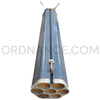
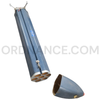
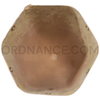
This inert U.S. Air Force MA-3 “Smiley” rocket launcher combines distinctive nose artwork with a documented link to 1950s military procurement. Manufactured by Century Industries Corporation of San Pedro, California, it was designed to carry seven 2.75-inch folding-fin aircraft rockets, or FFARs. Its compact tube cluster and smiling nose fairing make it a striking display piece from the early Cold War. This extremely rare example is the only specimen that we've had in the past 30 years. Considering the age and fragile nature of the launcher and fairing, it is in remarkable condition. Very early 2.75" rocket technology is very hard to come by. These MA-3 launchers were used in the very early years of the Vietnam War. Take note of the images from Life Magazine showing the MA-3 in southeast Asia. The MA-3 is constructed of a lightweight, fiberboard-type of material, and is considered to be a non-reloadable/expendable launcher. Due to its design type and construction materials, this is not considered to be a Destructive Device by the BATFE (just like the LAU-3 cardboard-tube launchers that were also used during the Vietnam War). A remarkable piece of Cold War / early Vietnam weapons history. This is the only example that we have, so you will be receiving the exact item shown in the photos. Remember, insured shipping/packaging is always included in the price that you pay.
Identification and Features
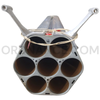
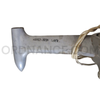
The manufacturer’s plate confirms the MA-3 identification, while the rear view shows its seven launch tubes. The visible markings record the equipment type, maker, procurement references, electrical requirement, and inspection fields.
- LAUNCHER ROCKET, AIRBORNE TYPE MA-3: Official equipment identification.
- CENTURY INDUSTRIES CORPORATION / SAN PEDRO, CALIFORNIA: Manufacturer and location.
- Seven launch tubes: Capacity for seven 2.75-inch FFARs.
- STOCK No. 6720-S05400: Stock reference printed on the plate.
- PART No. RD12-3700: Launcher assembly part number.
- EXHIBIT No. WCL-755: Procurement exhibit reference.
- CONTR. No. AF 33(600)28547: Air Force procurement contract.
- C.I.C. / INSPECTED / AF: Manufacturer and Air Force inspection fields; individual inspection stamps are indistinct.
- FOR 28V d-c SYSTEM: Designed for an aircraft electrical system using 28-volt direct current.
- U.S. PROPERTY: Government ownership marking applied to military equipment.
- PAT. PENDING: Patent-pending notice, which does not establish that a patent was later granted.
- RD12-series rear markings: One fitting reads RD12-3728 ASSY. The companion appears to read RD12-3729 ASSY, but its final digits are worn. ASSY abbreviates “assembly.”
Function
The MA-3 provided an external carrying and launching unit for unguided aircraft rockets. Air Force technical order T.O. 11A-1-20 describes it as an expendable underwing launcher for seven 2.75-inch rockets on combat aircraft. “Expendable” means the launcher was intended to be discarded after use. The rockets’ folded fins allowed them to fit inside the tubes; those fins opened after launch to help stabilize flight.
Documented End-Item Application
The 1958 congressional report on rocket-launcher procurement states that the MA-3 was designed for the Republic F-84, North American F-86, and Martin B-57 aircraft. These applications place the launcher within the armament history of early jet fighters and light bombers. The plate does not identify the specific aircraft or squadron associated with this example.
Product History
House Report 2660, published in 1958, records the contract shown on this launcher’s plate. Its detailed account lists an October 1954 award to Century Industries for 100,000 MA-3 launchers, with receipt of the contract acknowledged on October 27. This provides a firm connection to 1950s Air Force procurement. The contract date does not establish the individual manufacture date of this launcher.
Manufacturer and “Smiley” Design History
Century Industries developed the Smiley design at its own expense while its Navy Aero 6A launcher contracts were still underway. The company considered the new design an improvement and named it for the smiling faces painted on its nose fairings. The congressional record documents the design in 1954, well before the main U.S. combat role in Vietnam. This example’s artwork follows that documented motif.
Parent-Equipment History
The MA-3 reflects the challenge of adapting external weapons to faster jet aircraft. Its underwing form allowed suitable aircraft to carry a group of rockets in one compact store. As aircraft performance increased, launcher fairings faced greater demands. The congressional investigation discussed fairing problems on the faster F-100 and efforts to strengthen the design, showing why suitability for one aircraft did not ensure suitability for another.
Weapon-System Background
The 2.75-inch FFAR family, widely known as “Mighty Mouse,” became an important part of postwar aircraft armament. These rockets used solid-fuel motors and folding fins, with no guidance system to steer them after launch. The family served both air-to-air and air-to-ground roles, with different warheads suited to different targets. The MA-3 was one launcher developed for this broader rocket system, which also used other pods and aircraft-mounted launch arrangements.
History of Use
Official Air Force records list 64,818 MA-3 launchers in the fiscal-year 1959 inventory. That figure documents the type’s presence in Air Force stocks during the Cold War; it is not a count of examples surviving today. The larger 100,000-unit figure refers to the 1954 contract quantity. This launcher’s individual service location and any combat use remain undocumented.
Condition
Please check the pictures for the general condition of the item. Review the nose fairing, artwork, tube ends, rear fittings, and identification plate when assessing its display condition. Worn or indistinct markings are described according to the readings available.
Ideal For
This MA-3 offers collectors a direct connection between a marked military artifact and published procurement history. Its recognizable artwork also makes it useful for displays that explore military design, aircraft armament, and the character of early Cold War equipment.
- U.S. Air Force and Cold War aviation collections.
- Aircraft rocket-launcher and inert ordnance displays.
- F-84, F-86, and B-57 historical exhibits.
- Military nose-art and manufacturer-marking studies.
- Aviation museums and educational collections.
Approx length 50", Approx width 12", Approx height 14", Approx weight 30lbs.
Please visit our page about order lead times here: Order Lead Times.