





Description
U.S. Army M109 155mm Howitzer Powered Loader-Rammer, NSN 1025-00-404-7486
Item Overview
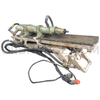
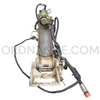
This U.S. Army Loader-Rammer, Powered is the hydraulic projectile-handling assembly used in the original M109 155mm self-propelled howitzer. It is identified by NSN 1025-00-404-7486 and Army drawing number 11604759. During loading, the crew placed a projectile on the rammer tray, positioned the mechanism behind the open breech, and used hydraulic power to push the projectile into the cannon tube. The assembly’s cylinder, hydraulic hoses, valve body, and supporting structure agree with the configuration documented for the original M109.
Identification and Features
The August 2026 catalog record identifies the unit as a complete powered loader-rammer and assigns it to original M109 end item NSN 2350-00-440-8811. The listed configuration includes the projectile tray, hydraulic cylinder, chute, guide, base, latch, cam, bracket, arm, wire rope, and assembling hardware. Drawing 11604759 is recorded under U.S. Army design-control activity CAGE 19204.
- Official nomenclature: Loader-Rammer, Powered
- NSN: 1025-00-404-7486
- Part/drawing number: 11604759
- End item: Original M109 155mm self-propelled howitzer
- End-item NSN: 2350-00-440-8811
- NSN assignment date: August 6, 1969
- Operating system: Hydraulic
Historical Background
The powered loader-rammer was developed as part of the original M109’s turret and cannon installation. Its purpose was to reduce the effort needed to seat heavy separate-loading 155mm projectiles while keeping the loading equipment compact enough for an enclosed self-propelled howitzer. The Army assigned this assembly’s NSN on August 6, 1969, several years after the first M109 entered service. That date records the federal supply identification and should not be treated as the assembly’s manufacturing date.
Function and Operation
The loader-rammer did not remove a projectile from storage by itself. Crew members selected the projectile, prepared it, and placed it on the rammer tray. The mechanism was released from its stowed position, moved along its support shaft, and aligned with the open breech. Hydraulic oil then entered the cylinder and drove the rammer head forward, seating the projectile in the cannon tube. After the projectile was seated, the mechanism retracted so the crew could load the selected propelling charge and primer.
Cataloged Assembly Configuration
The government catalog description lists tray 10922570, hydraulic cylinder 10954513, chute 10922578, guide 10922564, base 10922583, latch 10922531, cam 11604751, bracket 10922569, arm 11643972, wire rope 11604757, and associated assembling hardware. These components formed the structure that supported the projectile, positioned the rammer behind the breech, controlled movement between loading and ramming positions, and transferred hydraulic force to the projectile.
End-Item Application
NSN 1025-00-404-7486 is specifically cross-referenced to the original M109 under vehicle NSN 2350-00-440-8811. This application should not be extended to every M109 variant. Exact use on the M109A1 has not been confirmed, while M109A2 through M109A5 parts manuals identify a different complete rammer assembly under part number 12012181. The M107 and M110 self-propelled artillery systems also used different loader and rammer equipment.
M109 Weapon-System Background
The original M109 was accepted by the U.S. Army in the early 1960s as a tracked, turreted artillery vehicle capable of moving with armored and mechanized forces. It carried the short M126 or M126A1 155mm howitzer in the M127 mount and stored 28 rounds of ammunition. Its enclosed cab provided positions for the gun crew along with hydraulic traverse, elevation, and projectile-ramming equipment. The M109 became the foundation of a long-running family of American self-propelled howitzers, but later versions received longer cannons, revised ammunition storage, and redesigned loading equipment.
History of Use
Original M109 howitzers served with U.S. field artillery units during the Vietnam War. Their tracked mobility allowed batteries to relocate between firing positions while providing 155mm fire support for ground forces. During each loading cycle, crew members handled the projectile and placed it on the tray before the powered rammer seated it in the tube. This hydraulic assistance was especially valuable during repeated firing because complete 155mm projectiles were heavy and had to be seated firmly before the separate propelling charge was loaded.
Condition
This is a military-surplus powered loader-rammer assembly with the hydraulic cylinder, hoses, valve body, and attached structural components visible in the inventory photographs. The government record describes a complete assembly containing several additional pieces, so the stock images should be reviewed to determine the exact hardware included with the item received. Exterior finish, markings, fittings, and storage wear may vary between examples. Internal hydraulic condition is unknown.
Ideal For
This original M109 loading-system assembly is appropriate for vehicle restoration projects, artillery museums, military-technology collections, and educational displays. Its exposed hydraulic and mechanical components provide a detailed example of how early self-propelled artillery crews handled and seated separate-loading 155mm projectiles.
- Original M109 restoration
- Self-propelled artillery displays
- Military hydraulic-equipment collections
- Museum and educational exhibits
- 155mm loading-system research
Approx length 72", Approx width 12", Approx height 12", Approx weight 100lbs.
Pictures are stock images of our inventory. Unless otherwise noted, you will not be receiving the exact item shown in the pictures. The pictures are representative of the item’s general condition. The item you receive might be slightly better, or worse, condition than was shown in the pictures.
Please visit our page about order lead times here: Order Lead Times.