






Description
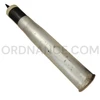
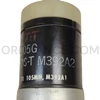
105mm M392A2 APDS-T Round for M68 and M68A1 Tank Guns
The 105mm M392A2 APDS-T Round is a collectible from the American 105mm tank-gun ammunition family. Its service design used a small, hard armor-piercing core carried inside a discarding sabot. Developed during the Cold War, this ammunition connects the M60 series, the upgraded M48A5, and the original 105mm M1 Abrams. Its history follows the growth of high-speed tank ammunition and the shared British and American roots of the guns that fired it.
Identification and Features
APDS-T means Armor-Piercing Discarding Sabot with Tracer. The A2 suffix identifies a version within the M392 family. Army ammunition references list the M392/M392A2 family under DODAC 1315-C505 and 1315-C506.
- Model: M392A2.
- Caliber: 105mm.
- Type: APDS-T tank-gun ammunition.
- Historical penetrator: Tungsten carbide core.
- Stabilization: Spin-stabilized service design.
- Gun applications: M68 and M68A1; British L7A1.
- Army round drawing: 8863427.
Function and Contents
In the original service round, the sabot carried a smaller armor-piercing core through the gun barrel. After leaving the muzzle, the sabot separated, allowing the sheathed core to continue toward the target. The core used its mass and high speed to penetrate armor. It was stabilized by spin from the rifled gun. A tracer at the rear helped crews observe its flight. The complete cartridge combined this projectile assembly with a cartridge case, an electric primer, and a propelling charge.
Historical Construction
Army manuals describe a tungsten carbide core held within a protective sheath, with the sabot fitted around it. A plastic centering band supported the forward portion. Near the rear, a fiber rotating band engaged the rifling, while a rubber seal, called an obturator, helped contain gas pressure. Listed service components include the M115 or M115B1 cartridge case, M80A1 electric primer, and M13 tracer.
Product History
The M392 ammunition family grew from British 105mm APDS development. Army manuals identify the earlier M392 as a British-made round carrying the designation L36A1. Its standard classification is recorded in 1961. The M392A2 followed within this family and appears in later American ammunition references with U.S. service components. Military specification MIL-C-46216B, dated April 15, 1969, covered manufacture through loading, assembly, and packing of the M392A2. This establishes a documented Cold War production standard for the exact model.
Documented Applications
Army firing table FT 105-A-4, dated April 1, 1996, names the M392A2 for the M68 and M68A1 gun systems on the M60, M60A1, M60A3, M48A5, and 105mm M1 Abrams. The military production specification also names the British L7A1 gun. The Abrams application is the early 105mm configuration; the later M1A1 and M1A2 belong to the separate 120mm ammunition system.
Equipment History
The M60 was adopted in 1959, with production beginning in 1960. It combined a diesel powertrain with a 105mm gun and became a major American Cold War tank. The M60A1 added a redesigned turret, while later upgrades improved stabilization, sights, and fire control. The M48A5 program brought the M68 gun to older M48 tanks beginning in 1975. The original M1 Abrams entered service in 1980 with a 105mm main gun. These changes carried the same gun-caliber family across several generations of armored vehicles.
Weapon-System Background
The British L7 gun emerged during the late 1950s as an answer to the need for stronger tank firepower. It allowed existing Centurion tanks to receive a more powerful weapon. The United States adopted a related design as the M68, pairing it with American tank mounts and fire-control equipment. These rifled guns could use several ammunition types for different duties. APDS served the armor-piercing role, while other cartridges supported attacks on lighter targets, smoke missions, or training. The M392A2 belongs to this wider 105mm weapon system.
Historical Service Characteristics
Army data sheets list a service muzzle velocity of about 1,478 meters per second, or 4,850 feet per second, for the M392A2. The original tracer was specified to remain visible for at least 2.5 seconds. Its armor-piercing core had no impact fuze and relied on kinetic energy. These published characteristics explain the design’s high-speed antitank role and describe the original military service cartridge.
History of Use
The M392A2 served as armor-defeating ammunition within the Cold War 105mm tank-gun system. Its documented applications span older upgraded tanks and the first Abrams generation. The Army’s 2001 Tank Gunnery manual still listed it among the six 105mm sabot service rounds available for the M1. That list also included later M728 APDS and fin-stabilized rounds such as the M735, M774, M833, and M900. The records show the M392A2’s place within a long period of ammunition development, as newer penetrator designs joined the 105mm inventory.
Training History
Army ammunition manuals identify the M724 and M724A1 target-practice discarding-sabot rounds as training counterparts to the M392A2. Their appearance and flight characteristics were similar to the service cartridge over the documented training range. This let crews practice with ammunition designed to match the service round’s behavior. The practice-round line also had British and American roots: the M724 adapted the British L45A1 with a U.S. primer, while the M724A1 was manufactured in the United States. The M392A2 designation identifies the service APDS-T model within that training and supply system.
Operational History of the Parent Tanks
The M60A1 continued to see combat after the Abrams entered service. U.S. Marine Corps M60A1 tanks took part in the 1991 Operation Desert Storm ground campaign to liberate Kuwait. One documented example is Genesis II, a tank of Company C, 3rd Tank Battalion, later preserved by the National Museum of the Marine Corps. Its service illustrates the lasting operational role of the M60A1 and its 105mm gun system. Army records place the retirement of the last U.S. military M60-series tanks at Fort Riley in May 1997.
Ideal For
This M392A2 round suits collections centered on Cold War armor, U.S. tank ammunition, and discarding-sabot technology. Its documented gun and vehicle applications also make it relevant to exhibits comparing the M48A5, M60 series, and early Abrams.
- Cold War tank ammunition collections.
- M60-series tank displays.
- M48A5 equipment exhibits.
- 105mm M1 Abrams collections.
- Military museums and reference displays.
Approx length 33", Approx width 6", Approx height 6", Approx weight 25.2lbs.
Pictures are stock images of our inventory. Unless otherwise noted, you will not be receiving the exact item shown in the pictures. The pictures are representative of the item’s general condition. The item you receive might be slightly better, or worse, condition than was shown in the pictures.
Please visit our page about order lead times here: Order Lead Times.